

Generative AI image tools have moved from novelty to serious production software, and the paid tiers in 2026 are where the real differences appear. A new nine-prompt evaluation of six paid AI image generators found one model pulling far ahead of the pack: Google's Nano Banana Pro, part of Gemini 3.
Key Facts at a Glance
- Winner: Google Nano Banana Pro, 93%.
- Runner-up: ChatGPT, 74%.
- Other scores: Midjourney 57%, Adobe Firefly 54%, Leonardo AI 52%, Canva 43%.
- Cost of winner: $19.99 per month as part of Google AI Pro.
- Test structure: Nine identical prompts across photo restoration, recontextualization, original art, text rendering, and pop culture.
- Main takeaway: For serious paid image generation, the gap between first and second was larger than the gap between second and sixth.
We Have a Winner
There is a clear winner in this set of tests, and it is not a close call. Google's Nano Banana Pro earned a near-perfect score of 93%. ChatGPT came in second at 74%. The other four tools ranked between 43% and 54%. In previous AI evaluations, several tools often performed reasonably well across the board. This time, one model stood out so consistently that the conclusion was unavoidable.
The test suite fell into four main categories: revising existing images, generating original images, adding text to images, and leveraging pop culture. All images were generated in a 1:1 square ratio so they could be compared side by side. All six contenders did a fine job when asked to create a simple logo. Beyond that, performance varied widely.
The practical bottom line is that anyone who wants serious AI image generation should consider spending $20 per month for Gemini 3, which provides access to Nano Banana Pro. Some tools offer extra features, but the primary difference between paid and free versions is usually usage volume. Nano Banana Pro, for example, cut off one tester after two images before an upgrade.
All subscriptions used for the test were purchased by the tester. No vendor paid for the conclusion, and the result was as surprising as it may be for many readers.
Google Gemini 3 Nano Banana Pro
Best AI image generator overall, by far
- Overall score: 93%
- Cost: $19.99 per month as part of Google AI Pro
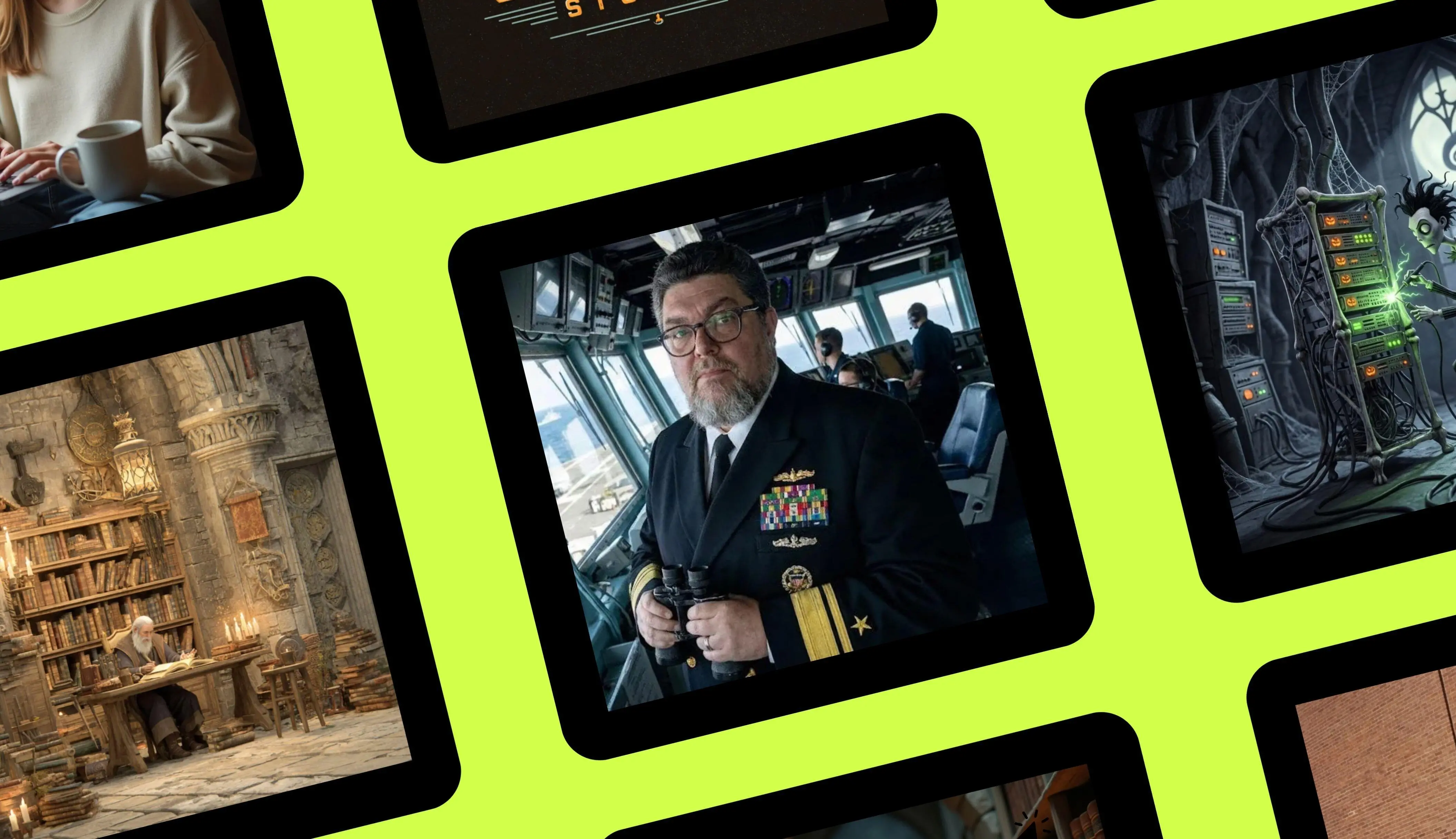
Nano Banana Pro excelled at photo recontextualization. In one test, it was given a picture of a man on a walk and asked to place him in a US Navy admiral's uniform on the bridge of an aircraft carrier. The result kept his face and glasses, changed the angle he was facing, placed him properly on a ship's bridge, and even added binoculars to his hands. The only obvious issue was that Navy personnel, including admirals, generally do not wear beards.
The model also handled old photo cleanup well. A dark childhood photo of the tester standing on the USS Ling was restored so the details were visible. In another test, the model was asked to clean up and colorize an old truck photo. It initially returned the wrong image, which cost points, but when restarted it produced a cleaned-up version with mostly accurate lettering. The text still contained an error: it read 'BADICLOGICAL DEFEKSE' instead of the intended words. Text remains a problem for most AI image generators.
Creative generation was strong. Nano Banana Pro created a retro-futuristic logo for a video studio called Space Coast Studios, including a palm tree, a rocket, film imagery, and readable text. It also generated a medieval librarian in a candlelit stone library with candles, stone walls, and an appropriate atmosphere.
Social media prompts were handled cleanly. The model generated a senior adult holding a phone with correct ad copy, though the phone looked like an iPhone despite the prompt asking for a flagship smartphone. It also created a student in a cozy setting with a MacBook Pro and a cup of coffee. The text was properly placed and free of errors.
Pop culture prompts produced some of the best results in the entire test. For a fictional fourth Back to the Future movie set in 1920s New York, Nano Banana Pro included the DeLorean, a skateboard, period clothing, and strong text. It placed 'New York City 1925' on a marquee and added the tagline 'The Roaring Twenties Got Heavy.' A Nightmare Before Christmas-style IT professional in a data center also captured the requested Tim Burton feel.
The main drawbacks were a watermark in the bottom corner of each image and one session issue that caused the wrong image to be returned. Apart from that, and the minor truck text error, Nano Banana Pro did not get anything wrong. It earned a nearly perfect score.
ChatGPT
Best for natural-language iteration in chat
- Overall score: 74%
- Cost: $20 per month as part of ChatGPT Plus
OpenAI's image generation has shifted from the standalone DALL-E tool into the image generator inside ChatGPT. The company describes the current tool as GPT-4o image generation in ChatGPT. A newer ChatGPT Images update was also tested, and it improved some areas while losing points in others.
Photo retouching was not a strength. In the admiral recontextualization, ChatGPT produced a face that looked like the original subject, but the uniform rank insignia were unclear and appeared to be a strange mix of a lieutenant and an O-8 admiral. The childhood photo was good, and the model kept the original face rather than inserting a random adult face as an earlier version did.
Truck cleanup was acceptable but not perfect. The lettering changed from what should have read 'RADIOLOGICAL DEFENSE' to 'RADIO CHEMICAL DEFENSE,' with an extra space between 'CHEMICAL' and 'DEFENSE.' Some points were lost, though fewer than in the previous version.
The logo test was fine, although the result did not strongly reference Florida, palm trees, or sun. The librarian image matched the prompt and lost no points. Social media posts were mostly correct, but both blocks of text were placed in the same position. Moving text higher on the senior adult image would have been a better design choice. Lighter font styles and poor contrast made the text harder to read, costing a point each.
Pop culture was uneven. In one earlier test, the new ChatGPT Images update recreated a classic Star Trek scene, including an alien creature with a man-in-suit look. But when asked for Back to the Future-inspired and Nightmare Before Christmas-inspired images, the results were disappointing. That pushed the new image generator's score from 81% for the previous version down to 74%. The older version had produced a fine Back to the Future image with a recognizable DeLorean and a good logo, and a Nightmare-inspired IT professional with a gray pallor, though that image included a third hand. For now, pop-culture references in ChatGPT are hit or miss.
Midjourney
Best for hyper-creative cinematic imagery
- Overall score: 57%
- Cost: $10 per month for Midjourney Basic
Midjourney remains excellent for originating creative imagery. It is less effective for image cleanup, recontextualization, or text. In the admiral test, it reproduced a yellow shirt and some background elements from the original picture, but the person was not the same subject, and a ship appeared at the back of a park for no clear reason. The childhood photo was not cleaned up and was made worse. The truck test produced a different truck, along with a young woman who resembled a Star Trek captain.
The logo test was workable. Midjourney rendered the text correctly and added a palm tree and towers that could suggest space, though a rocket would have been a nice touch. The library image was almost exactly what was pictured, and no points were lost there. Social media posts showed Midjourney's strengths in character rendering: the man looked real, and the woman was composed well, though her laptop sat low on her legs and appeared to be an older-generation MacBook Pro. The major problem was that Midjourney did not render any of the requested text, which cost points.
Pop culture results were mixed. The Back to the Future image lost points because it had no text and the city looked too neon for 1920s New York. The Marty character was not a Michael J. Fox lookalike, but the overall look was right, so no points were removed for that. The Nightmare Before Christmas-style IT image was a standout and demonstrated why Midjourney has such a devoted following.
Adobe Firefly
Best for commercial-safe images
- Overall score: 54%
- Cost: $9.99 per month as part of Firefly Standard and included in many Adobe plans
Adobe Firefly is the AI engine inside Photoshop and other Adobe tools, but it also works as a standalone web interface. Firefly now lets users choose other AI engines, meaning it is possible to run Nano Banana inside Firefly. All Firefly testing for this comparison used the Firefly Image 5 preview model.
Firefly was the most uncooperative and fussy tool from a copyright standpoint. When a tester tried to upload a personal photo wearing a Star Trek-inspired Gorn T-shirt, Firefly refused the upload. The image had to be taken into Nano Banana Pro to remove the shirt graphic before Firefly would accept it.
The admiral image barely produced an admiral's uniform, and the face was not the original subject. The childhood transformation was good and easy to see. Truck colorization looked great, but Firefly did not clean up the image artifacts, which was the main goal. The logo was usable. The library image evoked the right feel, but the face fell into a serious uncanny valley, resembling a 2021-era AI face. Points were lost there as well.
Social media prompts caused trouble. Both prompts initially returned an error saying that including artist names in the prompt did not meet user guidelines. No artist
Source:ZDNET News