

Google is reportedly developing a new feature for Pixel smartphones that will use artificial intelligence to provide users with a more intuitive understanding of battery usage. The feature, tentatively called "Battery Usage Summaries," is designed to offer personalized insights and tips, leveraging the company's on-device Gemini Nano AI model. This move aims to transform the generic battery statistics screen into a more actionable and user-friendly health hub.
What Is Battery Usage Summaries?
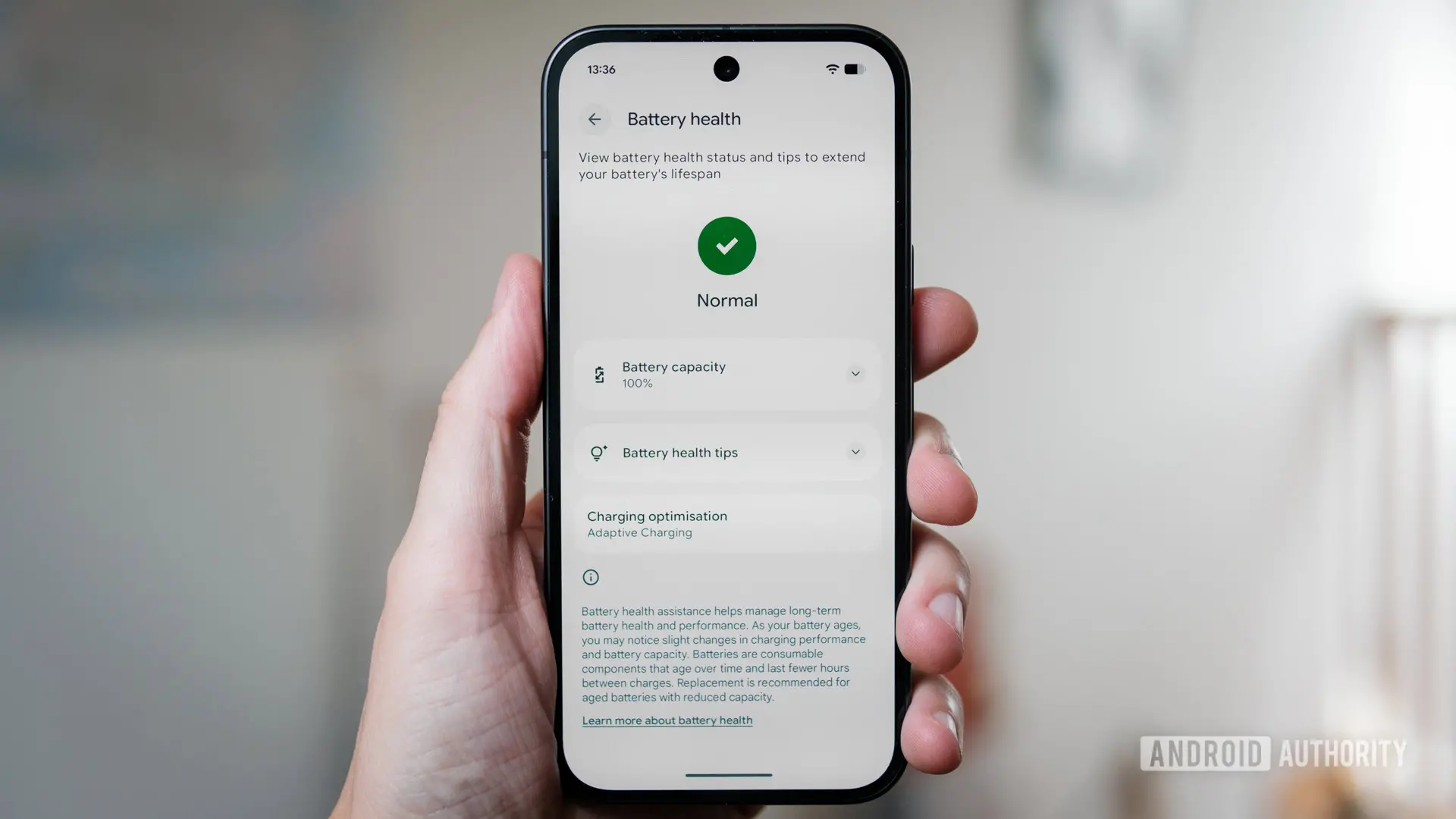
According to strings discovered in the latest Android 17 QPR2 Beta 3 release, Google is building a feature that will generate a summary of a user's app and battery usage. Instead of just showing a graph of battery drain over time, the feature will provide contextual insights and recommendations. Users will be able to access it via the three-dot menu icon in the Battery Health section of the Settings app. There, they can enable or disable the feature, though it is not yet fully functional. Enabling it currently shows an error message stating, "Device Health services not responding. Check back later."
How It Works
The feature relies on Gemini Nano, Google's lightweight on-device AI model. This means the processing happens locally on the phone, ensuring privacy. Google even highlights this in the feature's description, noting, "Your data stays private and never leaves your device." The summaries will be generated based on the user's activity over the last 14 days. The system will calculate "usual battery life" based on this window, providing a more accurate picture of typical usage patterns.
Critically, the feature will exclude system apps from its analysis. System apps are essential software that can't be disabled, so including them would add noise without offering actionable insights. Instead, summaries will focus solely on apps that the user actively uses. This approach is designed to simplify the information and make it more relevant to the user's daily habits.
Personalized Tips and Feedback
In addition to summarizing battery usage, the feature will provide personalized tips to help users improve battery life. The exact nature of these tips is not yet clear, but they could include suggestions like reducing background activity for certain apps, adjusting screen brightness, or limiting location access.
Users will also be able to provide feedback on the summaries to help Google improve the feature. Positive feedback options include "Accurate," "Insightful," "Easy to understand," and "Useful actions." Negative feedback options include "Inaccurate," "Not insightful," "Hard to understand," "Poor actions," and "Missing information." This feedback loop will be crucial for refining the AI-generated content and ensuring it meets user expectations.
Gemini Nano and Device Compatibility
One of the most significant implications of this feature is its reliance on Gemini Nano. This model is currently supported on Pixel 8 and newer devices, as well as some other flagship Android phones. As a result, older Pixel devices—such as the Pixel 7 and earlier—are unlikely to receive the Battery Usage Summaries feature. This would be a notable distinction, as many users of older Pixel phones still expect timely software updates and new features.
Gemini Nano is part of Google's broader push to bring on-device AI to Android. It powers features like Magic Compose in Messages, Summarization in Recorder, and more. By running AI models locally, Google can offer advanced capabilities without sending sensitive data to the cloud. This not only enhances privacy but also reduces latency and allows features to work offline.
Potential Impact on Battery Health Management
Battery health is a growing concern for smartphone users. As batteries age, their capacity degrades, leading to shorter battery life and potential performance issues. Most phones offer a basic battery usage screen that shows which apps consume the most power, but this data is often presented in a raw, uncompromising format. The Battery Usage Summaries feature aims to change that by offering a more holistic and actionable view.
For example, instead of just seeing that YouTube used 30% of your battery, the feature might explain that YouTube was used for 2 hours of video streaming and suggest reducing video quality or enabling battery saver mode. This type of contextual insight is only possible with the kind of on-device AI that Gemini Nano provides.
How It Compares to Existing Battery Tools
Pixel phones already have a Battery Health section that displays battery capacity and estimated lifespan. However, the new summaries feature goes a step further. It doesn't just tell you the physical health of the battery; it tells you how you're using it and what you can do to get more out of it. This is closer to the kind of features seen on some other Android devices, like Samsung's Device Care, but Google's approach appears to be more deeply integrated with AI.
Samsung offers a "Battery Protection" feature and a battery diagnosis tool, but it doesn't provide AI-generated conversational summaries. Apple's iOS offers a battery health menu with peak performance capability and battery cycle count, but again, it lacks the personalized recommendations that Google is developing. If Google executes this well, it could set a new standard for battery management on Android.
Development Status and Release Timeline
The feature is still in active development. The presence of strings in Android 17 QPR2 Beta 3 suggests that Google has already laid the groundwork, but the implementation is incomplete. The error message regarding Device Health services indicates that the backend is not yet fully connected. However, Google may be planning to launch the feature in a future Pixel Drop or with the stable QPR2 build, which is expected to arrive in December.
Android 17 QPR2 is the second quarterly platform release for Android 17. It is being tested on Pixel devices, and the beta program allows users and developers to try new features before they are publicly released. Historically, Google has used QPR releases to introduce features that are not tied to a major Android version update. Battery Usage Summaries could be one of those features.
Privacy and Security Considerations
Given that the feature processes data on-device, privacy concerns are minimal. Google has emphasized that user data never leaves the device, aligning with its broader privacy initiatives. The company has been increasingly focusing on local processing for sensitive features, such as Private Compute Core and on-device speech recognition. This approach could also help Google avoid some of the regulatory scrutiny that comes with cloud-based AI processing.
However, there are still questions about how the feature will handle data from apps that are not downloaded from the Play Store or sideloaded apps. Since the summaries are generated locally, the AI should be able to process data from any app, regardless of its source. This could be a privacy advantage, as the app usage data is not shared with Google servers.
What This Means for Pixel Users
For Pixel users, especially those with newer devices, Battery Usage Summaries could be a valuable addition. It promises to turn battery management from a passive review of graphs into an active, guided experience. The personalized tips could help users extend their battery life without needing to manually dig into app settings. It also reinforces the idea that Google's Pixel devices are the primary platform for showcasing its latest AI innovations.
Still, the success of this feature will depend on the accuracy of the AI-generated insights and the relevance of the tips. If the summaries are vague or generic, they won't add much value. Google's feedback mechanism suggests that the company is open to iterating based on user input, which is a good sign.
The Broader AI Push on Android
Battery Usage Summaries is just one example of how Google is weaving AI into the Android operating system. From adaptive battery and adaptive brightness to the more advanced Gemini-powered features, AI is becoming a core part of the user experience. Google's strategy is to mature these features over time, using on-device models to deliver personalization without compromising privacy.
As AI hardware capabilities continue to improve, we can expect more features like this to emerge. The integration of Gemini Nano into battery management is a natural next step in this evolution. It also demonstrates how AI can be used to solve everyday problems, rather than just powering chatbots or image generators.
While the feature is not yet live, the discovery in the beta firmware gives us a clear picture of what Google has in store. With the stable QPR2 release expected in December, Pixel users may not have to wait long to try it. Until then, we'll keep an eye on further developments in the beta builds and update as soon as more information is available.
Source:Android Authority News