

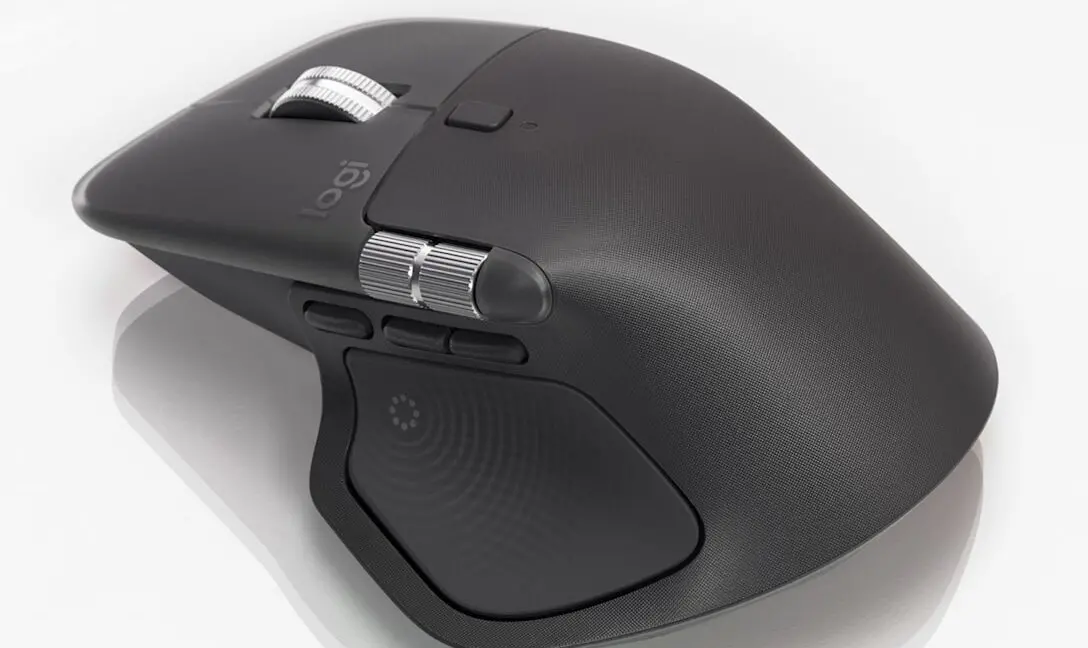
Logitech is facing a proposed class action lawsuit over its decision to keep tariff-related price increases even after the U.S. government refunded the company for import duties that the Supreme Court had declared unlawful. Two California plaintiffs filed the complaint in the U.S. District Court for the Northern District of California, San Jose Division, seeking to recover what they describe as “monies that Logitech extracted from American consumers” as offsets for tariffs that have since been invalidated.
The case centers on price increases Logitech imposed in April 2025, when it raised prices on 51 percent of its product portfolio, with some prices climbing as much as 25 percent. According to the complaint, Logitech did not publicly announce the increases, and the higher prices remain in effect. The plaintiffs—SJK Development, a construction and residential housing builder in California, and California resident Ala Awadalla—both bought Logitech mice at inflated prices during the relevant period. They argue that, had the tariffs not been used as a justification, they would have paid less for the same hardware.
“Had Logitech not inflated its prices in the name of the unlawful IEEPA tariffs, Plaintiffs would have paid less for the same product. Plaintiffs have received no refund, credit, or other compensation from Logitech corresponding to the tariff component of the price Plaintiffs paid,” the complaint alleges.
Key facts at a glance
- Product scope: Logitech raised prices on 51 percent of its portfolio in April 2025, with increases as high as 25 percent.
- Plaintiffs: SJK Development and Ala Awadalla filed the proposed class action in the Northern District of California.
- Claim: Logitech collected higher prices because of IEEPA tariffs and retained a $61 million refund after the tariffs were ruled unlawful.
- Relief sought: The lawsuit asks for a declaratory judgment that Logitech must pass the refund proceeds to customers.
The tariff backdrop
The International Emergency Economic Powers Act, or IEEPA, gives the president broad authority to impose economic controls during a declared national emergency. The Trump administration used that authority to place tariffs on imported goods, creating a new cost layer for companies that manufacture overseas. Many hardware makers responded by adjusting prices before the duties fully took effect, and Logitech was no exception.
In April 2025, Logitech implemented price increases across more than half of its product lineup. The company did not issue a consumer-facing announcement about the changes, but the increases were visible in retail prices for products such as mice, keyboards, and other peripherals. The complaint says Logitech tied those increases to the tariffs, though the company has not publicly confirmed the exact pricing rationale.
On investor calls, Logitech executives discussed the pricing strategy more openly. In May, Logitech CFO Matteo Anversa said, “The positive impact of the US price actions and favorable foreign exchange more than offset the impact of tariffs and higher promotions.” Anversa was speaking about Logitech’s fiscal Q4 2026, a period he described as “the highest level of profitability in the history of the company outside of the COVID peak.” The plaintiffs point to those statements as evidence that Logitech was not simply absorbing tariff costs but was using them to justify price increases that improved profitability.
The Supreme Court ruling and the $61 million refund
In February, the U.S. Supreme Court ruled that the IEEPA tariffs were imposed illegally. The decision invalidated the tariff program and opened the door for companies that paid the duties to seek refunds from the federal government. The refund process has been ongoing since the ruling.
According to the complaint, Logitech received a full refund of $61 million for the invalidated tariffs, including $15 million during the first quarter of fiscal year 2027 and $46 million after the close of that quarter. The plaintiffs argue that keeping those refunds while leaving customer prices elevated amounts to a windfall. The complaint states that Logitech “has been—and absent relief will continue to be—enriched twice over at its customers’ expense: once by the tariff-justified overcharges collected from Plaintiffs and the Class, and again by the government’s refund, with interest, of the very duties those overcharges were represented to cover.”
From the plaintiffs’ perspective, the money belongs to the people who actually paid higher prices. They argue that Logitech used the tariffs as cover to collect extra revenue, then received the tariff money back from the government. If Logitech is allowed to keep both, the company would benefit twice from a tariff regime that the Supreme Court has said was unlawful.
Legal claims and requested relief
The complaint seeks to recover money on behalf of a proposed class of U.S. customers who bought Logitech products at tariff-inflated prices. The exact legal theories will be tested in court, but the underlying argument is straightforward: Logitech was unjustly enriched when it retained price increases tied to duties that no longer had a lawful basis.
The lawsuit also requests a declaratory judgment stating that Logitech must give the IEEPA tariff refund proceeds to customers. That request reflects a broader question about what companies owe consumers when a government-imposed cost is later invalidated. Businesses usually have no legal obligation to reduce prices after a tax or tariff is struck down, but plaintiffs argue that the circumstances here are different because Logitech explicitly treated the tariffs as a cost that customers needed to cover.
Broader wave of tariff refund lawsuits
Logitech is not alone in facing this kind of case. Customers have filed similar lawsuits against Microsoft, Nintendo, and Sony over tariff-related price increases. The technology industry broadly relied on imports and supply chains in Asia, making many consumer electronics companies particularly exposed to the tariffs. When the Supreme Court invalidated the IEEPA tariffs, refund applications and class action claims followed.
Those cases could set a precedent for whether tariff refunds must flow through to end consumers. Some companies have taken the position that refunds from the government are separate from the retail prices they set. If a court accepts that argument, consumers would have no claim to any refund that a manufacturer receives. If the courts side with consumers, companies could be forced to recalculate pricing and distribute refunds across large customer bases.
Potential defenses and arbitration issue
One likely defense is that Logitech’s prices were set independently and reflected many factors beyond tariffs. While executive comments tied the price increases to tariffs, the company could argue that market conditions, component costs, and currency movements also played a role. Courts may need to determine what portion of the price increase was actually attributable to the invalidated tariffs.
Another significant issue is arbitration. Logitech’s end-user license agreement includes arbitration provisions, and companies in similar cases have attempted to move disputes out of court. Nintendo, for example, filed a motion to compel arbitration in the tariff refund lawsuit against it. Nintendo also argued that customers “received exactly what they paid for” and that there is not “anything ‘unjust’ about Nintendo retaining money that it may receive from the government as tariff refunds.” Logitech could pursue a similar procedural challenge before the case reaches the merits.
The outcome of these motions could determine whether the Logitech case proceeds as a class action in federal court or is pushed into individual arbitration. If arbitration is compelled, individual consumers would face a much higher barrier to recovery, since the cost and effort of pursuing a claim could exceed the value of a mouse or keyboard.
As the legal process moves forward, Logitech has not yet responded publicly to the complaint. A request for comment was not answered. The company will have the opportunity to file a response, and the court will decide whether the plaintiffs can represent a broader class of customers.
Source:Ars Technica News