

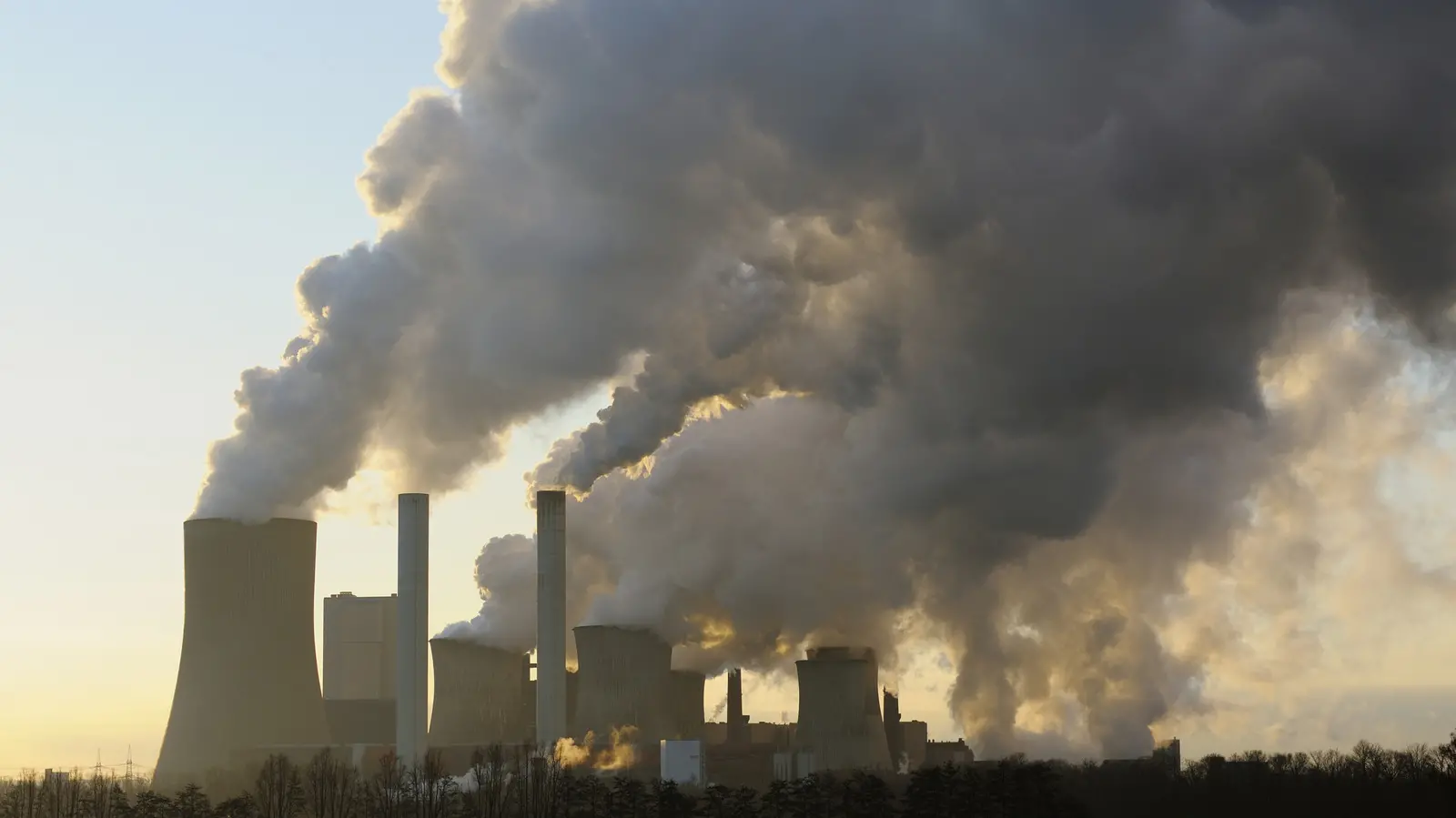
The global economy is still powered largely by fossil fuels. Coal, oil, and natural gas account for roughly 82 percent of primary energy, while renewables provide close to 9 percent and nuclear makes up a smaller but vital part of the balance. That is a heavy load for a group of fuels that cannot last forever. The same carbon molecules that release energy when burned are also the main source of greenhouse-gas emissions, which is why governments, utilities, and investors are looking for a lower-carbon substitute. Yet the transition is not just an environmental project. Fossil fuels are finite. Forecasters have warned for years that accessible supplies of oil, gas, and coal will become harder to find and more expensive to extract. That alone makes a move toward other sources inevitable.
Renewable energy is an obvious answer. Wind, solar, hydro, and geothermal already make up a meaningful share of electricity generation, and their costs have fallen sharply. But renewables have practical limits. They are intermittent, land-hungry, and dependent on weather and geography. One common engineering rule of thumb is that it takes roughly 800 wind turbines running under normal conditions to match the annual output of a single large nuclear reactor. Nuclear power, by contrast, runs almost continuously and can produce enormous amounts of electricity from a very small physical footprint. That makes nuclear power one of the few technologies capable of replacing fossil fuels at the scale required.
The question is not whether nuclear power could do the job in theory. The real question is how many nuclear power plants would be needed. There is no single precise answer because the result depends on what we are trying to replace. Are we trying to replace every barrel of oil burned for transportation, every cubic foot of natural gas used to heat homes, and every ton of coal used in industry? Or are we only focused on the electricity that fossil fuels generate? Those two scopes produce very different numbers.
Replacing all fossil-fuel energy
Fossil fuels do much more than spin turbines. Oil powers cars, trucks, ships, and airplanes. Natural gas heats buildings and fuels industrial furnaces. Coal is used in steelmaking and cement production. About 82 percent of the world's primary energy still comes from these sources, so any serious attempt to replace all of it with nuclear power must start with total energy consumption, not just electricity.
Global fossil-fuel consumption in a recent year stood at about 505 exajoules. An exajoule is an enormous quantity of energy, roughly equal to 278 terawatt-hours. Multiplying those numbers shows that fossil fuels supplied about 140,390 terawatt-hours of energy in that single year. To put that number in perspective, the United States generates about 4,300 terawatt-hours of electricity in a year. The entire world generates far more energy from fossil fuels each year than all of the world's power plants produce in the form of electricity.
Power stations, however, are not usually measured in terawatt-hours. They are rated in watts or gigawatts. A one-gigawatt plant operating all year at full capacity produces 8,760 gigawatt-hours, or 8.76 terawatt-hours. To compare fossil-fuel consumption with nuclear-plant output, we need to divide the annual energy figure by the number of hours in a year. When 140,390 terawatt-hours is divided by 8,760, the result is about 16,000 gigawatts of continuous power.
That 16,000 gigawatts represents the average rate at which fossil fuels were consumed worldwide. If nuclear power had to replace that entire flow of energy, we would need enough reactors to produce 16,000 gigawatts of continuous output. The existing global nuclear fleet is much smaller. In recent years, the world has operated about 437 nuclear reactors with a combined electrical capacity of roughly 392 gigawatts. That works out to an average of just under 0.9 gigawatts per reactor. Dividing 16,000 gigawatts by 0.9 gigawatts per reactor gives a total of about 18,000 nuclear plants.
That number is staggering. For comparison, the entire world currently operates about 440 reactors. Replacing all fossil-fuel energy with nuclear power would therefore require a fleet more than 40 times larger than today's. It would mean building thousands of reactors in countries that have never hosted one, training millions of engineers and technicians, and creating supply chains capable of forging reactor pressure vessels, steam generators, and safety systems on an industrial scale.
Focusing only on electricity
Replacing every fossil-fuel use is a very broad goal. It includes gasoline for cars, jet fuel for airplanes, and oil used to make plastics, lubricants, and asphalt. Most people asking whether nuclear power can replace fossil fuels have something more specific in mind: electricity generation. That is the part of the energy system where nuclear power competes directly with coal and natural gas.
The electricity-only calculation produces a much smaller number, though still far larger than the existing fleet. Worldwide, renewable sources now generate roughly one-third of all electricity. In a recent global electricity review, renewables produced about 10,730 terawatt-hours, which was close to 33.8 percent of the total. The remaining electricity, about 21,460 terawatt-hours, was supplied by fossil fuels, nuclear energy, and other non-renewable sources. If nuclear power were asked to fill that non-renewable gap, the annual output would still be enormous.
Divide 21,460 terawatt-hours by 8,760 hours in a year, and the result is about 2,450 gigawatts of average continuous power. The U.S. Department of Energy often uses one gigawatt as the approximate size of a large nuclear plant. That means it would take roughly 2,450 one-gigawatt nuclear reactors to replace the electricity currently produced by non-renewable sources. If the calculation isolates only electricity generated by fossil fuels and assumes that existing nuclear plants continue operating, the number would be somewhat lower. But even the lower estimate remains in the thousands.
This is the most practical way to read the original question. The world does not need to run every car on nuclear electricity directly. It could electrify transportation and industry, then generate the extra electricity from nuclear power. But that shift would raise overall electricity demand. A future in which cars, buses, trucks, and trains are electric would need even more power plants than the 2,450 reactors implied by today's grid. Adding heat pumps to replace gas furnaces and electric furnaces for steel and cement would raise the total further.
Plant size and reactor technology matter
The exact number of nuclear plants depends on the type of reactor chosen. The current global fleet averages about 0.9 gigawatts per unit, but new large reactors often have capacities above 1.2 gigawatts. If the world built only the largest available designs, fewer plants would be needed. If it relies on small modular reactors, which typically produce about 0.3 gigawatts, the number would be much higher.
Small modular reactors are often discussed as a way to reduce the cost and complexity of nuclear construction. They are designed in factories and assembled on site, which could make them easier to deploy in remote areas or in countries with smaller electricity grids. However, a 300-megawatt small reactor is not a full replacement for a conventional 1,000-megawatt plant. Replacing a one-gigawatt plant with small reactors would require three or four separate units. That means more sites, more regulatory approvals, and more supply-chain capacity.
A global fleet of 2,450 one-gigawatt reactors would be a historic construction program. Since the first commercial nuclear plants were built, the world has completed just over 700 reactors, and many of those have already been retired. Building 2,450 new reactors would require roughly five times the total number ever connected to the grid. At a rate of 30 new reactors per year, a level never achieved before, it would still take more than 80 years to reach 2,450 plants.
The capacity factor advantage of nuclear power
Nuclear plants have one major advantage that makes the arithmetic less frightening than it first appears: they operate continuously. A nuclear reactor can run at full power for 18 to 24 months between refueling outages. Many reactors achieve capacity factors above 90 percent, meaning they produce close to their maximum possible output for most of the year. Wind and solar farms, in contrast, often have capacity factors of 25 to 40 percent because the wind does not always blow and the sun does not always shine.
This difference matters when comparing power sources. A 1,000-megawatt wind farm may be able to generate only 250 megawatts of average power. A 1,000-megawatt nuclear plant can generate about 900 megawatts of average power. That is why nuclear power produces so much energy from a relatively small number of reactors. It also explains why nuclear plants are described as reliable baseload sources while variable renewables need backup generation or large amounts of energy storage.
If the world chose a mix of nuclear and renewables, the required number of nuclear plants would fall. Solar and wind could supply a large share of daytime electricity, while nuclear power could handle the nighttime load, winter weather, and periods of low wind. This hybrid approach would reduce the need for thousands of reactors, but it would also require enormous investments in transmission lines and storage facilities.
Time, cost, and construction challenges
Even if the technical case for 2,450 nuclear plants is clear, the practical case is much harder. Nuclear power plants are among the most complex industrial facilities ever built. A standard pressurized-water reactor, the most common design in the world, can take five to six years to construct under ideal conditions. Many recent projects have taken longer and cost billions more than their original budgets.
Planning is another obstacle. A nuclear plant needs a site with adequate cooling water, geologically stable ground, and access to high-voltage transmission lines. Public acceptance is also essential. In some countries, nuclear power is widely accepted and provides a large share of electricity. France, for example, built dozens of reactors in a concentrated push during the 1970s and 1980s and now gets a large share of its electricity from nuclear energy. Other countries have struggled to find any site that local communities will accept.
The fuel cycle must also be considered. Uranium mining, enrichment, and fuel fabrication require their own industrial base. Spent nuclear fuel must be safely stored for decades, and a much larger fleet would create much larger quantities of radioactive waste. Countries would need final disposal facilities, and none of those facilities will be built quickly.
Financing is perhaps the greatest barrier. A single large nuclear reactor can cost between five billion and ten billion dollars or more. A fleet of 2,450 reactors would require trillions of dollars in investment. Governments would need to provide loan guarantees, carbon pricing, or other policies to make such projects viable. Private investors rarely bear the full risk of nuclear construction because of long timelines and uncertain regulatory approval.
The global energy picture is changing
The demand for electricity is expected to grow sharply in the coming decades. Electric vehicles, industrial heat pumps, hydrogen electrolyzers, and data centers are all adding pressure to power grids. This means the number of nuclear plants needed in 2050 may be higher than today's calculation suggests. A world that electrifies almost everything will need far more clean electricity than the world produces today.
At the same time, rapid advances in battery storage and grid management could reduce the need for nuclear power. If renewable energy can be stored cheaply for weeks rather than hours, the share of electricity supplied by solar and wind will grow. If advanced nuclear designs, such as sodium-cooled fast reactors or high-temperature gas reactors, can use fuel more efficiently and produce less waste, the economics may improve.
The true answer to the question is therefore not a single tidy number. It depends on how much energy is consumed, how much of that energy is converted to electricity, what share of the burden renewables will carry, and which kind of nuclear reactor is chosen. What the arithmetic shows is that nuclear power can make a decisive contribution, but only with a construction effort many times larger than anything attempted so far.
Replacing fossil fuels entirely would require close to 18,000 average-sized nuclear plants because fossil fuels still provide the largest share of all energy used for transport, industry, and heating. Replacing only the electricity that would otherwise come from fossil fuels would require about 2,450 one-gigawatt reactors. Both estimates dwarf the roughly 440 reactors currently operating worldwide. Whether that construction program is realistic depends not only on engineering and money, but on political leadership, public trust, and the willingness of governments to plan decades into the future.
Source:SlashGear News