

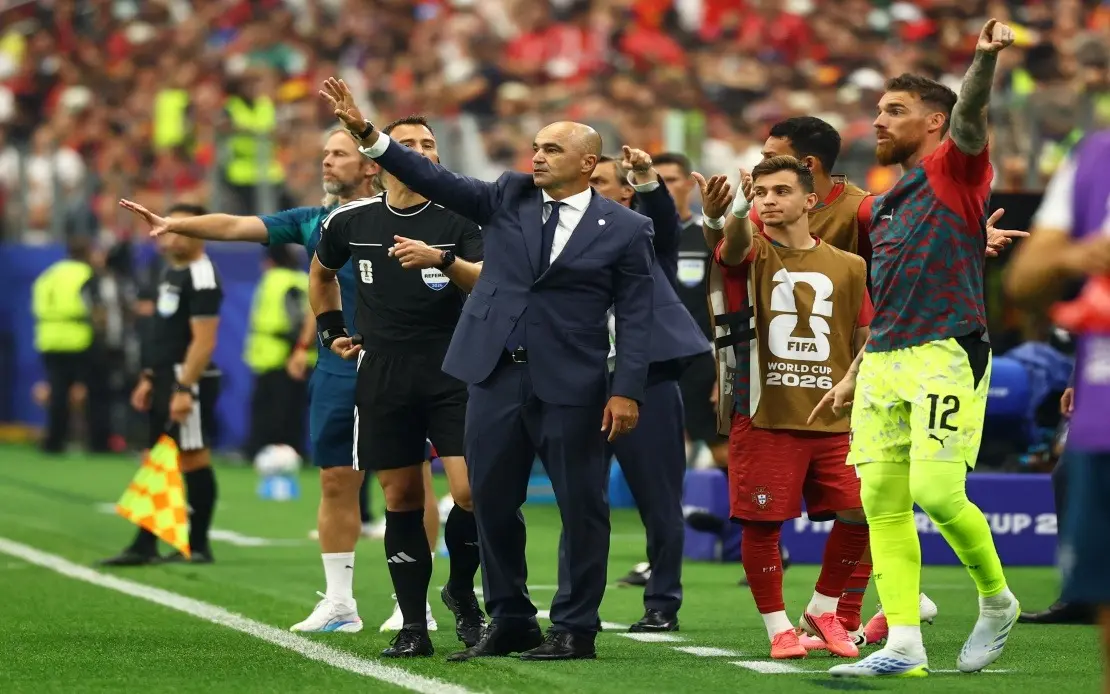
LISBON — The Portuguese Football Federation has secured a major coup by appointing veteran manager Jorge Jesus as the new head coach of the national team, following their disappointing exit from the 2026 FIFA World Cup. The 71-year-old tactician, who last led Saudi Arabian giants Al-Nassr to the league title, agreed to terms during a meeting in Lisbon on Thursday, according to Portuguese media reports. Jesus is set to be officially unveiled on Friday, with a contract that runs until 2030 — a clear signal that the federation views him as the long-term architect for the Seleção, especially with the 2030 World Cup on home soil on the horizon.
Jesus steps into a role left vacant by Roberto Martínez, who resigned after Portugal's 1-0 defeat to Spain in the round of 16. Martínez, a Spanish manager, had overseen the team for three and a half years, delivering the 2025 Nations League title but unable to progress beyond the knockout stage in the United States. The decision to appoint Jesus, a Portuguese native with deep domestic roots, aims to bring a more familiar and experienced hand to guide the national team through a period of transition.
Jorge Jesus: A Coaching Career Spanning Decades
Jorge Fernando Pinheiro de Jesus, commonly known as Jorge Jesus, is one of the most decorated Portuguese managers in recent history. Born in the Lisbon suburb of Amadora, he began his coaching career in the lower divisions before making a name for himself at Braga. However, his true success came at Benfica, where he led the club to three Primeira Liga titles (2009–10, 2013–14, 2014–15), as well as multiple Taça de Portugal and Taça da Liga trophies. He also guided Benfica to two Europa League finals (2013 and 2014), cementing his reputation as a European-level competitor.
After a controversial move to city rivals Sporting CP in 2015, Jesus continued to add silverware, winning the 2018 Portuguese League Cup. His tenure at Sporting was marked by both tactical innovation and occasional friction with club hierarchies, but his ability to develop young talent and implement an attacking style earned him respect across the continent.
In 2019, Jesus took on a new challenge by moving to Brazil to manage Flamengo. There, he achieved spectacular success, winning the Campeonato Brasileiro Série A, the Copa Libertadores, and the Recopa Sudamericana in a memorable 2019 campaign. His high-pressing, fluid attacking football transformed Flamengo into one of South America's most dominant sides, further enhancing his global profile.
Recent Stint at Al-Nassr and Link with Ronaldo
Jesus's most recent job was at Al-Nassr in Saudi Arabia, where he coached superstar Cristiano Ronaldo. Under his guidance, Al-Nassr captured the Saudi Pro League title in the 2024–25 season, breaking the stranglehold of Al-Hilal. The partnership with Ronaldo, who is the all-time leading scorer for Portugal, adds an intriguing subplot to Jesus's appointment. While Ronaldo has yet to announce his retirement from international football, his continued presence in the squad could influence team dynamics. Jesus is known for his strong personality and tactical discipline, which may prove crucial in managing the expectations around the 41-year-old forward.
The State of the Portuguese National Team
Portugal entered the 2026 World Cup as one of the favorites, buoyed by their Nations League victory and a deep pool of talent including Ronaldo, Bruno Fernandes, Bernardo Silva, João Cancelo, and rising stars like João Félix and Gonçalo Ramos. However, their campaign ended abruptly in the round of 16, where a disciplined Spanish side edged them out 1-0. The defeat raised questions about Martínez's tactical approach and his ability to extract the best from a generation that had won Euro 2016 and Nations League 2019 under Fernando Santos.
The Portuguese federation acted swiftly to secure a replacement. Jesus's extensive experience — at both club and international levels (he briefly coached the Portuguese U-21 team early in his career) — was seen as a stabilizing force. His contract extension through 2030 is a clear statement of intent: Portugal wants to build a team capable of competing for the next World Cup on home soil, which will be co-hosted by Spain, Morocco, and South American nations Uruguay, Argentina, and Paraguay.
Tactical Philosophy and Challenges Ahead
Jesus is renowned for his attacking philosophy, often deploying a 4-4-2 or 4-3-3 system that emphasizes width, high pressing, and quick transitions. At Benfica and Flamengo, his teams were known for their relentless energy and creative midfield play. However, adapting these principles to the international game — where training time is limited and player availability varies — will be a significant challenge. Jesus must also integrate younger talents such as Vitinha, Nuno Mendes, and António Silva while managing the inevitable transition away from the Ronaldo era.
One immediate task will be the qualification campaign for the 2028 European Championship, which kicks off next year. Portugal, currently ranked 8th in the FIFA world rankings, will be expected to top their group and make a deep run in the tournament. Jesus's first matches in charge are likely to be friendlies in September 2026, giving him a chance to implement his ideas before competitive fixtures begin.
Reactions from the Football World
The appointment has drawn mixed reactions. Supporters point to Jesus's trophy-laden résumé and his intimate knowledge of Portuguese football. Critics, however, note his age (71) and the fact that he has not managed at the highest level of European club football since leaving Benfica in 2015. Additionally, his tenure at Sporting ended on a sour note, and his time at Al-Nassr, while successful domestically, did not produce standout performances in the Asian Champions League.
Nevertheless, the federation believes Jesus's experience and tactical acumen outweigh any concerns. In a statement to Portuguese media, a source close to the negotiations said, "Jesus brings a winning mentality and a deep understanding of the players. He knows what it takes to win titles, and that is exactly what the national team needs."
Historical Context: Portuguese Managers on the National Stage
Portugal has often turned to foreign coaches in the past — such as Luiz Felipe Scolari of Brazil and Martínez of Spain — but the appointment of Jesus marks a return to Portuguese leadership after Martínez. The last Portuguese-born manager to lead the Seleção was Fernando Santos, who took over in 2014 and delivered the Euro 2016 title. Santos was known for a pragmatic, defensively solid style, which contrasted with the more flamboyant football of Jesus. It remains to be seen whether Jesus will adopt a similar pragmatism for tournament football or stick to his attacking principles.
The 2030 World Cup will be a centenary edition, and Portugal — co-house with Spain — has never hosted a World Cup before. The federation is under immense pressure to build a team that can not only compete but also captivate the home fans. Jesus, despite his age, brings a wealth of experience that could be invaluable in navigating the pressures of a home tournament.
Key Players and Squad Evolution
One of Jesus's primary tasks will be to manage the transition of the squad. While Ronaldo remains a talismanic figure, his physical decline is increasingly evident. Jesus will need to decide whether to phase him out gradually or maintain his starting role. Younger attacking options like Gonçalo Ramos, João Félix, and Rafael Leão offer pace and versatility, but they have yet to consistently perform at the international level. In midfield, Bruno Fernandes and Bernardo Silva provide creativity, but the team lacks a true defensive midfielder in the mold of a Declan Rice or Casemiro. Jesus may look to promote players like João Palhinha or Rúben Neves to solidify the base.
Defensively, Portugal has solid options: Rúben Dias is among the best center-backs in the world, and Nuno Mendes and João Cancelo offer attacking thrust from full-back. However, the 1-0 defeat to Spain exposed vulnerabilities in set-piece defending and transitional moments — areas where Jesus will likely focus his early training sessions.
Contract Details and Future Plans
The reported contract until 2030 is unusual for a manager of Jesus's age, but it indicates the federation's desire for stability. According to sources, the deal includes performance-related clauses that could allow for an early termination if results do not meet expectations. Jesus is expected to bring in his own staff, including longtime assistants, to support his vision. The federation has also vowed to provide him with every resource necessary, including access to youth academies and data analytics.
Portugal's next competitive event will be the 2028 European Championship, but the federation is already eyeing the 2029 Confederations Cup (if it still exists) and the 2030 World Cup qualifiers. Jesus's experience in building long-term projects — notably at Benfica and Flamengo — will be tested at the international level, where the dynamics are far more complex.
In the meantime, Portuguese fans can expect an exciting brand of football under Jesus. His teams are rarely boring, and his passion on the sidelines is infectious. Whether that translates into sustained success remains to be seen, but the federation has placed its trust in a man who has won nearly everything at club level. The only missing piece in his résumé is a major international trophy — and he now has six years to try to add one.
Source:BERNAMA News