

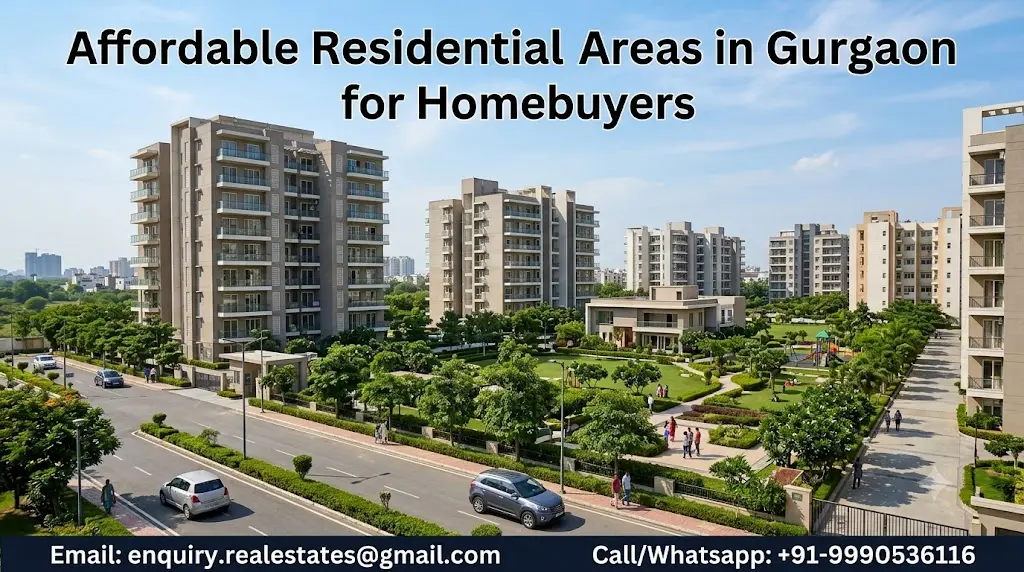
Gurgaon, long celebrated as North India's premier corporate powerhouse and luxury hub, has historically carried a reputation for high entry barriers in real estate. However, behind the soaring glass facades of Cyber City and the sprawling mansions of Golf Course Road lies a rapidly expanding, highly accessible property market. Finding affordable residential areas in Gurgaon for homebuyers has become a realistic, value-driven strategy for middle-income professionals, nuclear families, and first-time investors looking to anchor themselves in the National Capital Region (NCR). As macro-infrastructure expansions continue to reshape the city's geographical footprint, peripheral and emerging sectors now offer high-quality living spaces at a fraction of central city costs. Evaluating options through Ireo New Project provides a clear window into how master-planned infrastructure and modern community designs are extending value and convenience across expanding residential corridors.
Navigating the budget housing landscape in Gurgaon requires a structured approach that balances basic sale price (BSP) against commute times, civic readiness, and long-term capital growth potential. Driven by aggressive state government initiatives, expanding transit networks, and well-regulated township master plans, budget-conscious buyers no longer need to sacrifice construction standards or legal safety. This comprehensive analysis breaks down the leading affordable micro-markets across Gurgaon, examining sector-wise valuations, social infrastructure density, connectivity catalysts, and essential legal due diligence to empower your home-buying journey in 2026.
Affordable Residential Areas in Gurgaon for Homebuyers: Comprehensive Analysis
Key Factors Defining Affordable Residential Areas in Gurgaon for Homebuyers
Identifying true value in a dynamic real estate ecosystem requires looking beyond developer promotional marketing. To evaluate whether a micro-market represents a genuine value proposition, buyers must assess four structural pillars: price accessibility, transit infrastructure, social livability, and regulatory approval.
1. Baseline Price-to-Income Alignment
An affordable micro-market in Gurgaon typically commands baseline property values ranging between ₹4,500 and ₹11,500 per square foot, depending on whether the unit falls under government-subsidized schemes, group housing projects, or private builder floors. This price window allows working professionals and young families to secure 2-BHK and 3-BHK apartments within total outlay budgets of ₹45 Lakhs to ₹1.25 Crores.
2. Transit Velocity and Commute Times
Affordability loses its appeal if daily commutes to major commercial districts consume hours of productivity. Prime budget sectors are strategically positioned near major transit routes like the Dwarka Expressway (NH-248BB), Southern Peripheral Road (SPR), Pataudi Road, Sohna Elevated Highway, and the Kundli-Manesar-Palwal (KMP) Expressway.
3. Civic and Social Ecosystem Growth
A sustainable residential corridor requires functional civic infrastructure—including municipal water supply, underground electrical wiring, operational stormwater drainage, and wide sector access roads. Proximity to established educational institutions, multi-specialty hospitals, and local neighborhood shopping complexes defines whether an affordable area is immediately livable or strictly speculative.
4. Legislative Safety and Policy Backing
The expansion of affordable housing in Gurgaon is heavily anchored by state policies, primarily the Haryana Affordable Housing Policy (AHP 2013) and the Deen Dayal Jan Awas Yojana (DDJAY). Coupled with strict oversight by the Haryana Real Estate Regulatory Authority (HRERA), these legislative frameworks protect buyers against construction delays, fund diversion, and unauthorized developer practices.
Macro Policy Framework Driving Budget Housing in Gurgaon
The transformation of Gurgaon's real estate ecosystem from an exclusive luxury market into a balanced, multi-tier landscape is largely credited to policy-driven intervention.
The Haryana Affordable Housing Policy (AHP)
Launched to promote urban housing accessibility, AHP mandates that developers construct high-density, compact apartment projects with capped carpet area prices. Key benefits include:
- Fixed carpet area pricing that shields buyers from market volatility during construction.
- Zero maintenance charges billed to buyers for the first five years post-handover.
- Mandatory construction completion within four years from the date of building plan sanction.
- Allotment executed via a legal, government-monitored computer draw to ensure fairness.
Deen Dayal Jan Awas Yojana (DDJAY)
DDJAY caters to homebuyers seeking independent floor living and land ownership at manageable price points. By encouraging low-rise gated communities on smaller plot sizes (up to 150 sq. yards), DDJAY provides higher density allowances and faster execution timelines, giving buyers independent floor layouts with private stilt parking and terrace rights.
Top Affordable Residential Micro-Markets in Gurgaon
Selecting the ideal micro-market depends on your workplace location, family lifestyle requirements, and long-term capital goals. The following corridors represent the premier budget-friendly residential zones in Gurgaon.
1. New Gurgaon (Sectors 82 to 95): The Premier Mid-Segment Axis
Positioned between NH-48, the Dwarka Expressway, and the KMP Expressway, New Gurgaon has established itself as the flagship choice for first-time homebuyers and young executive families.
- Connectivity Focus: Seamless entry onto NH-48 provides straight-line travel to Rajiv Chowk, Cyber Hub, and the Manesar industrial corridor.
- Livability Highlights: Features wide 24-meter and 60-meter internal sector roads, operational shopping plazas, and reputable private school campuses.
- Property Spectrum: Ranges from compact 2-BHK government scheme apartments starting around ₹35–45 Lakhs to sprawling gated township residences under ₹1.1 Crore.
2. Sohna Road & South Gurgaon (Sectors 2, 5, 33, 34, 35)
South Gurgaon (Sohna) has emerged as a major budget residential expansion hub, driven directly by the completion of the 6-lane elevated Sohna Highway.
- Commute Times: The elevated corridor has reduced travel times between Rajiv Chowk and South Gurgaon to under 15 minutes, bridging the gap between outer sectors and central commercial zones.
- Educational and Industrial Anchors: Home to higher education institutions like GD Goenka University and KR Mangalam University, as well as proximity to the Sohna Industrial Model Township (IMT).
- Value Proposition: Capital valuations remain noticeably lower than central sectors, providing spacious 2-BHK and 3-BHK apartments within gated complexes at attractive price points.
3. Southern Peripheral Road (SPR) Pockets & Sector 67A
While SPR serves as a high-growth, mid-to-luxury corridor, specific sectors along this belt—such as Sector 67A, Sector 68, and Sector 70—contain high-value residential pockets. These zones allow buyers to access prime location advantages without luxury-tier pricing. Integrated communities like Ireo The Corridors demonstrate how large-scale master-planned developments in these sectors offer rich social amenities, open sports parks, and modern clubhouse facilities while maintaining high long-term capital preservation.
- Transit Connectivity: Direct links to Sohna Road, Golf Course Extension Road, and the Central Peripheral Road (CPR) bypass network.
- Social Ecosystem: Proximity to established commercial centers, international schools, and specialized medical facilities.
- Target Audience: Mid-level corporate managers, tech professionals, and long-term yield investors. Buyers seeking move-in-ready projects like Ireo Corridors Sector 67A Gurgaon benefit from mature sector infrastructure, existing resident communities, and immediate rental liquidity.
4. Peripheral Sectors Along Dwarka Expressway (Sectors 102, 103, 106, 107, 108)
The northern sectors along the Dwarka Expressway offer entry points for buyers who prioritize proximity to West Delhi and Indira Gandhi International (IGI) Airport.
- Infrastructure Transformation: The fully operational 8-lane elevated expressway provides high-speed regional travel, bypassing historic NH-48 bottle-necks.
- Investment Potential: High capital appreciation potential as secondary sector roads, municipal water connections, and commercial high streets near completion.
- Housing Profile: A healthy balance of group housing societies, DDJAY low-rise floor developments, and budget high-rise projects.
5. Old Gurgaon & Palam Vihar (Sectors 4, 7, 9, 12, 23)
For homebuyers who prefer established neighborhood character, immediate access to traditional markets, and mature public transit, Old Gurgaon and Palam Vihar provide compelling residential alternatives.
- Key Advantages: Zero waiting period for civic infrastructure, mature tree-lined avenues, immediate access to civil hospitals, and low recurring monthly maintenance overheads.
- Property Spectrum: Freehold independent builder floors, older housing board colonies (HUDA plots), and standalone residential plots.
Physical Infrastructure and Connectivity Arteries
Transit infrastructure dictates real estate appreciation and daily livability in Gurgaon's affordable corridors.
Pataudi Road Expansion and Sector Radial Connections
The ongoing expansion of Pataudi Road into a major 6-lane corridor acts as a structural lifeline for sectors 89 through 95 in New Gurgaon. This highway upgrade ensures smooth transit from Old Gurgaon's commercial districts directly into the outer sector boundaries.
Metro Extension Alignment Across Outer Corridors
Public transit access significantly enhances local property values. The approved extension of the Delhi Metro Yellow Line—connecting Millennium City Centre through Sector 10, Sector 37, and Old Gurgaon will directly benefit budget residents along these routes by dramatically lowering daily commute expenses.
Financial Blueprint: Total Cost of Ownership Beyond the Base Price
When budgeting for real estate acquisitions in Gurgaon, first-time homebuyers must look beyond the basic sale price (BSP) to accurately calculate total capital outlay.
Statutory Government Levies
- Stamp Duty & Property Registration: Haryana state stamp duty stands at 7% for male buyers, 5% for female buyers, and 6% for joint ownership within municipal boundaries. Registration fees are capped at ₹50,000.
- Goods and Services Tax (GST): Under-construction residential properties incur a 5% GST charge (without Input Tax Credit). Properties that have received a valid Occupation Certificate (OC) are completely exempt from GST.
Developer and Ancillary Charges
- External Development Charges (EDC) & Internal Development Charges (IDC): Government-mandated levies collected by developers to cover master city infrastructure, including main roads, sewerage systems, and water supply grids.
- Interest-Free Maintenance Security (IFMS): A one-time security deposit transferred to the Resident Welfare Association (RWA) upon project handover to manage long-term complex upkeep.
- Preferential Location Charges (PLC): Additional per-square-foot charges applied to units with preferred orientations, such as park views, corner placements, or lower floor positions.
Comparative Evaluation: Affordable High-Rises vs. Low-Rise Builder Floors
Homebuyers evaluating budget sectors often choose between high-rise group housing apartments and low-rise builder floors (DDJAY).
High-Rise Gated Communities
High-rise developments provide comprehensive security, power back-up, landscaped central parks, and structured community living. Buyers considering versatile residential layouts under Ireo New Project Gurgaon prioritize gated security, master-planned amenities, and structured long-term asset management.
DDJAY Low-Rise Builder Floors
Low-rise independent floors appeal to buyers who want faster project execution, lower density living, direct plot ownership rights, and reduced long-term monthly maintenance costs.
Step-by-Step Legal Due Diligence Checklist for Homebuyers
Purchasing property in budget-friendly sectors requires diligent legal verification to safeguard your lifetime savings.
- Verify HRERA Registration: Confirm that the project possesses an active Haryana RERA registration number displayed on all marketing collateral. Check the HRERA portal to review sanctioned floor plans, legal disclosures, and quarterly progress updates.
- Inspect Occupation Certificate (OC) Status: For ready-to-move properties, ensure the builder has received a valid OC issued by the Directorate of Town and Country Planning (DTCP). Occupying a property without a valid OC is legally unauthorized and risks service disconnections.
- Verify Land Title Deeds: Confirm that the developer holds clear, unencumbered land ownership or a legally binding Joint Development Agreement (JDA) registered with state land revenue authorities.
- Review Escrow Compliance: Ensure buyer disbursements are deposited directly into the project's designated RERA escrow bank account to guarantee that capital is used exclusively for site construction.
Future Outlook and Growth Catalysts (2026 - 2030)
The long-term value trajectory of affordable residential areas in Gurgaon is supported by several major infrastructure catalysts:
- Expansion of Transit-Oriented Developments (TOD): Land-use policies along key transport corridors will encourage compact, walkable communities near transit hubs, reducing reliance on private vehicles.
- Completion of Metro Spur Lines: The introduction of rapid metro feeder routes connecting Old Gurgaon, SPR, and New Gurgaon will increase property valuations across peripheral sectors.
- Sustainable Building Standards: Emerging budget projects are adopting energy-efficient construction techniques, solar energy integration, and graywater recycling, lowering ongoing utility expenses for residents.
- High Accessibility: Areas like New Gurgaon, Sohna Road, and SPR peripheral pockets offer accessible entry options for budget-conscious homebuyers.
- Policy Protections: Initiatives like the Haryana Affordable Housing Policy and DDJAY provide structural pricing controls, delivery timelines, and legal safety under HRERA.
- Infrastructure Catalysts: Major roadways—including the Dwarka Expressway, Sohna Elevated Highway, and Pataudi Road—ensure efficient connectivity to corporate business hubs.
- Comprehensive Budgeting: Homebuyers must account for additional statutory expenses—including stamp duty (5-7%), GST (for under-construction units), EDC/IDC, and IFMS—when planning total capital outlays.
- Due Diligence Priority: Thorough legal verification of HRERA credentials, land title deeds, and Occupation Certificates (OC) is essential to protect your real estate investment.
Frequently Asked Questions
What are the top affordable residential areas in Gurgaon for homebuyers?
Top budget micro-markets include New Gurgaon (Sectors 82 to 95), South Gurgaon (Sohna Road sectors), peripheral pockets along the Dwarka Expressway (Sectors 102 to 108), Sector 67A peripheral zones, and Old Gurgaon/Palam Vihar.
What is the typical price range for budget homes in Gurgaon?
Prices in affordable sectors generally range from ₹4,500 to ₹11,500 per sq. ft. Total unit prices range from ₹35 Lakhs to ₹45 Lakhs for government policy homes, up to ₹75 Lakhs to ₹1.25 Crores for private mid-segment high-rises and low-rise floors.
How does the Haryana Affordable Housing Policy benefit first-time buyers?
The policy provides capped carpet area rates, zero maintenance fees charged by the builder for five years post-handover, strict four-year construction deadlines, and an allotment process managed via a transparent government draw.
Are affordable residential sectors in Gurgaon well-connected to Cyber City and Golf Course Road?
Yes, primary budget corridors are connected to major business districts via high-speed transit routes, including the Dwarka Expressway, Southern Peripheral Road (SPR), Sohna Elevated Highway, and NH-48.
What is the difference between DDJAY floors and standard group housing apartments?
Deen Dayal Jan Awas Yojana (DDJAY) focuses on low-rise independent builder floors built on smaller plots with direct land rights, while group housing projects offer high-rise apartment living with extensive shared amenities.
Final Thoughts
Finding affordable residential areas in Gurgaon for homebuyers comes down to strategic timing, disciplined sector selection, and thorough legal evaluation. As mega-infrastructure developments like the Dwarka Expressway, Sohna Elevated Corridor, and expanded metro networks reach maturity, Gurgaon's peripheral sectors continue to solidify their position as liveable, value-driven residential hubs. By aligning your property purchases with established developer track records, transparent HRERA governance, and high-growth micro-market corridors, buying a budget-friendly home in Gurgaon remains a sound, accessible path toward long-term security and capital appreciation.