

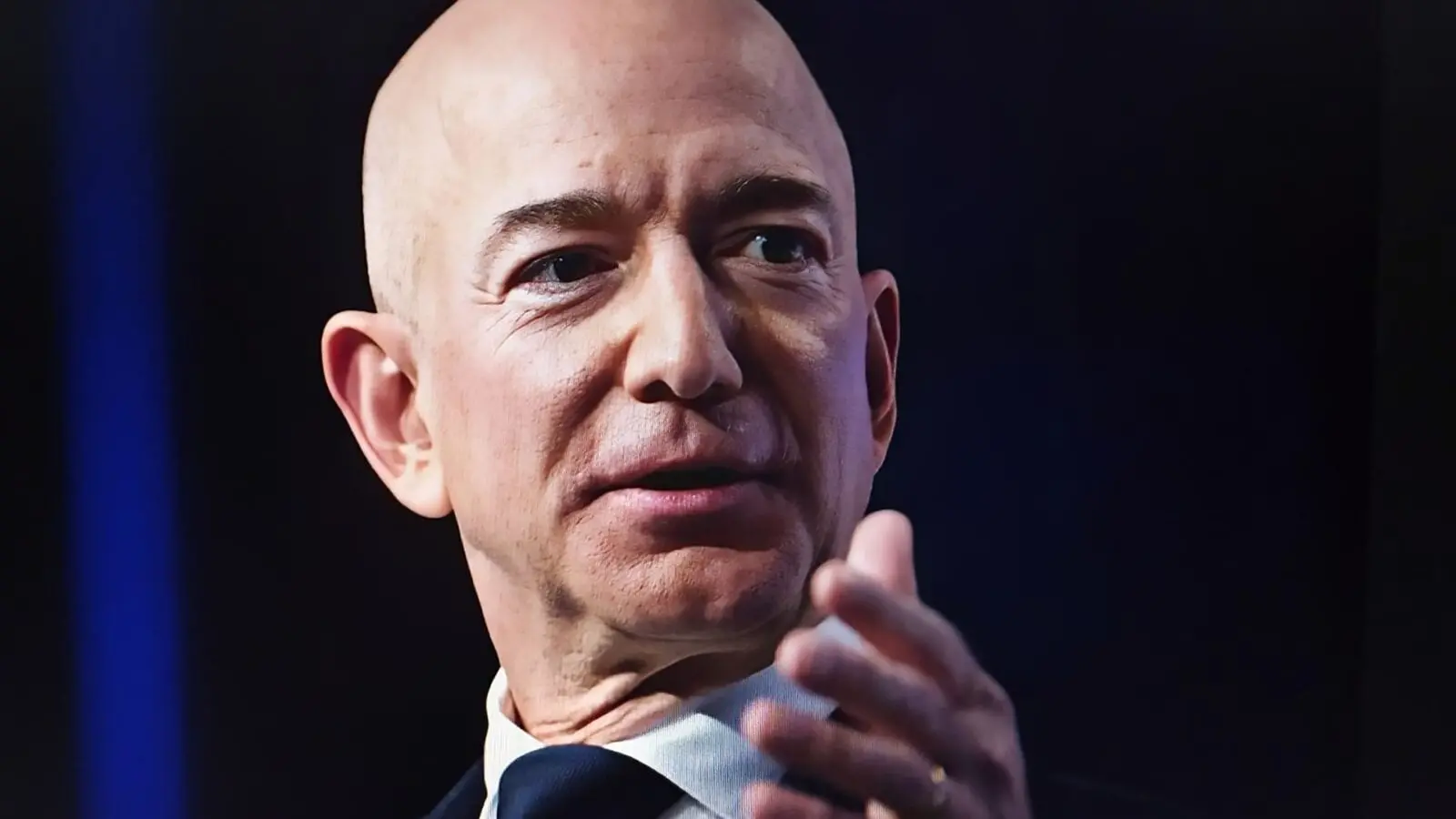
At the VivaTech 2026 conference in Paris, Jeff Bezos, the founder and former CEO of Amazon, made headlines with a bold prediction: artificial intelligence (AI) will not cause widespread job losses but instead trigger a labor shortage. Speaking to an audience of tech leaders, entrepreneurs, and journalists, Bezos argued that AI will expand human potential rather than replace it. His comments came as he also unveiled details about his latest startup, Prometheus, a company focused on accelerating the invention and production of physical goods.
“I actually think AI will cause a labor shortage because it will enable people to identify more problems,” Bezos said. “There is an infinite number of things to invent, and it is our current capabilities that limit us today. It’s not our imagination that holds us back, but what we are actually able to do.” He elaborated that many ideas never come to fruition due to physical and cognitive constraints. With AI and new technologies, those constraints will dissolve, leaving imagination as the only bottleneck.
The AI-Labor Paradox: Shortage, Not Surplus
Bezos’s view stands in stark contrast to the widespread fear that AI will automate millions of jobs, leading to mass unemployment. Studies from organizations like McKinsey and the World Economic Forum have projected that AI could displace up to 85 million jobs by 2025, but also create 97 million new ones. Bezos leans heavily on the optimistic side of that equation, suggesting that the net effect will be a demand for more human workers, not fewer. He points to historical examples where technological revolutions—such as the Industrial Revolution and the rise of the internet—initially caused disruption but ultimately increased the overall demand for labor by creating entirely new industries.
“Every time we’ve seen a major technological shift, the same pattern emerges,” Bezos explained. “People worry about robots taking over, but in the end, we have more jobs, not fewer. AI will be the most profound enabler of human ingenuity we’ve ever had. It will allow us to turn ideas into reality at a speed that was previously unimaginable.” His argument is that AI will augment human abilities, enabling people to tackle complex problems in fields like healthcare, climate science, and manufacturing. As a result, companies will need even more workers to implement these new solutions.
Prometheus: From Software to Physical Production
Bezos used the VivaTech stage to promote Prometheus, a startup he founded that recently raised $12 billion in funding. The company’s mission is to create tools that help engineers invent and produce physical products significantly faster than current methods. While many AI companies focus on large language models and software, Prometheus is targeting the hardware world—a much more complex domain. “Software is easy,” Bezos noted. “You can iterate in hours. But designing and manufacturing a physical object—a new engine, a medical device, a building component—can take years. We want to compress that timeline dramatically.”
Prometheus is not building a general-purpose AI chatbot. Instead, it is developing specialized AI systems that understand physics, materials science, and manufacturing processes. According to Bezos, these systems are trained not just on text but on vast datasets of engineering simulations, product specifications, and real-world production data. “Reading about how to build a bridge is not the same as understanding the forces, materials, and constraints involved,” he said. “Our AI must learn from doing, from simulation, and from failure.” The startup’s name, Prometheus, evokes the Greek myth of bringing fire—and by extension, transformative technology—to humanity.
Background on Bezos and His Technological Vision
Jeff Bezos is no stranger to ambitious technological bets. Founding Amazon in 1994, he transformed e-commerce, cloud computing (via AWS), and logistics. His other ventures include Blue Origin, a space exploration company, and The Washington Post. Throughout his career, Bezos has consistently argued that technology should be used to expand human capability rather than replace it. His investment in AI predates the current boom; Amazon has used machine learning for years in its recommendation engine, supply chain, and Alexa voice assistant. Bezos has often spoken about a world where humans and AI collaborate—what he calls “tool for the mind.”
His prediction of a labor shortage aligns with his broader philosophy: if AI takes over routine tasks, humans will be free to focus on higher-level creativity and problem-solving. He has previously stated that the most dangerous thing is not AI but “complacency” and a failure to innovate. At VivaTech, he reiterated that the pace of change will only accelerate, and societies must prepare by investing in education and retraining. However, he emphasized that the market will naturally adapt, creating new roles we cannot yet imagine.
Detailed Analysis: AI, Labor, and the Economics of Invention
The idea that AI could cause a labor shortage might seem counterintuitive, but it rests on several economic principles. First, the “lump of labor fallacy”—the belief that there is a fixed amount of work to be done—is generally discredited by economists. When productivity increases, costs fall, demand rises, and new tasks emerge. AI could dramatically lower the cost of invention and production, leading to an explosion of new products and services. This, in turn, would require more human workers to design, maintain, and improve these systems.
Second, Bezos’s claim that AI will help identify more problems is grounded in the concept of “problem space.” Human beings have finite attention and cognitive capacity. AI can analyze vast amounts of data, identify patterns, and suggest opportunities that humans might miss. For example, in drug discovery, AI can screen millions of compounds in days, a task that would take humans years. This accelerates the pace of innovation, creating demand for clinical trials, regulatory experts, and manufacturing staff.
Third, the physical product domain is particularly constrained. Unlike software, which can be updated in real-time, hardware requires prototyping, testing, and scaling. Prometheus aims to shorten this cycle by using AI to generate designs, simulate performance, and even control robotic fabrication. If successful, it could make hardware development as agile as software development. Bezos envisions a world where an engineer can describe a new product idea in natural language, and the AI generates multiple viable designs, performs virtual tests, and then instructs a factory to produce the best version.
Challenges and Criticisms
Not everyone shares Bezos’s optimism. Critics argue that AI could exacerbate inequality, concentrate wealth, and displace workers in specific sectors like retail, transportation, and customer service. The transition period, even if temporary, could be painful for those without the skills to work alongside AI. Additionally, the concept of a labor shortage assumes that the economic pie grows fast enough to absorb displaced workers—an assumption that may not hold if AI predominantly automates cognitive tasks previously thought safe.
Prometheus itself faces enormous technical hurdles. Training AI on physical systems requires data that is expensive and difficult to gather. Real-world testing is slow, and failures can be catastrophic. Moreover, the startup must compete with established players like Siemens, GE, and Autodesk, who are also investing in AI-aided design and manufacturing. Nevertheless, Bezos’s track record and the massive funding give Prometheus a strong footing.
Broader Implications for Engineering and Manufacturing
If Prometheus succeeds, it could revolutionize industries from aerospace to consumer goods. Engineers would spend less time on routine calculations and more on creative problem-solving. Manufacturing could become more localized and responsive, reducing supply chain vulnerabilities. The labor shortage Bezos predicts might manifest as a surge in demand for highly skilled engineers, data scientists, and technicians who can work alongside these AI tools. Meanwhile, routine manual and cognitive jobs could dwindle, reinforcing the need for education reform.
Bezos’s VivaTech appearance also highlighted a growing trend among tech billionaires: using public platforms to shape the narrative around AI. By framing AI as a job creator, he deflects regulatory scrutiny and positions his ventures as solutions to societal problems. Whether his prediction proves accurate remains to be seen, but his influence ensures that the debate will continue.
In the meantime, Prometheus is already hiring engineers, physicists, and AI researchers. The startup’s offices in Seattle and Boston are expanding rapidly. Bezos concluded his talk by saying, “The future is not something you wait for; you build it. With AI, we can build a future where the only limit is what we can imagine.”
Source:Presse-citron News