

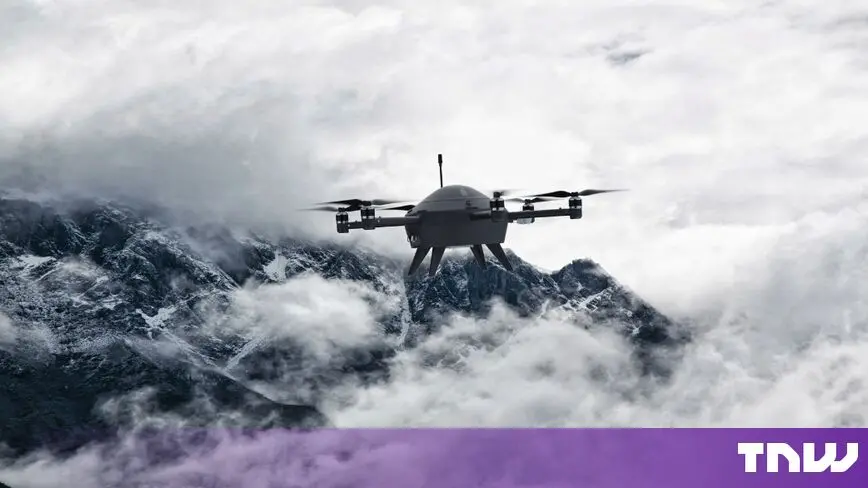
The artificial-intelligence weather boom has a dirty secret. For all the talk of models that see storms days ahead, an AI forecaster is only as good as the observations that feed it, and lately those observations have run thin. Drones are now being sent aloft to plug the gap, quietly becoming sensors that armies and energy traders alike depend on.
Key Facts
- Weather drones are replacing radiosondes, the single-use balloons launched twice daily from weather stations worldwide.
- The lower few kilometres of the atmosphere, where most weather phenomena occur, have become a data blind spot due to reduced balloon launches.
- Swiss company Meteomatics has delivered operational weather-drone data to the US National Weather Service for the first time.
- Energy traders are among the keenest customers for improved low-altitude data, as it directly impacts wind, solar output and temperature forecasts.
- Military forces also rely on the same data for decisions about when to fly, fire and move troops.
The Hidden Weakness of AI Weather Forecasting
The pitch for AI meteorology is seductive. Google DeepMind has claimed its system is the world’s most accurate 10-day weather forecaster. Yet even the most sophisticated neural network is only as good as the data it consumes. A model trained on yesterday’s readings still needs fresh measurements to tell it what the sky is doing right now. Starve it of ground truth, and it is essentially guessing.
The blind spot sits in the lowest few kilometres of the atmosphere, the layer where most of our weather happens. For decades, that slice was measured by radiosondes, instrument-laden balloons launched twice a day from stations around the globe. These balloons carry sensors that measure temperature, humidity, pressure and wind as they ascend, transmitting data back to forecasters. But the network of radiosonde launches has been thinning, and the timing could hardly be worse for an industry racing to build the smartest forecasts money can buy.
Why Weather Balloons Are Disappearing
The decline is partly self-inflicted. In the United States, staff shortages after federal layoffs pushed the National Weather Service to suspend or reduce launches at a string of upper-air stations through 2025. This has punched holes in a dataset forecasters had long taken for granted. Budget constraints and logistical challenges have also affected other countries, leading to gaps in observation coverage at precisely the moment when AI models crave more data.
Weather balloons themselves are a fragile and costly infrastructure. Each balloon is a single-use affair; it drifts off on the wind, rises until it bursts, and the instrument package often falls into remote areas and is rarely recovered. This means every launch represents a direct loss of hardware, and the data collection is inherently limited by the schedules of the stations. With fewer launches, the temporal resolution of upper-air observations deteriorates, leaving forecasters with a patchy picture of the atmosphere.
The Drone Solution
Enter the drone. Companies such as Switzerland’s Meteomatics fly what it calls Meteodrones, small uncrewed aircraft pitched explicitly as replacements for radiosondes. They climb several kilometres, sampling temperature, humidity, pressure and wind on the way up, then land to be sent up again. This reusable approach turns what was a disposable instrument into a dependable feed of data.
The economics help too. A weather balloon is lost after a single flight, whereas a drone gathers its data and comes home to fly again. Over time, the cost per profile drops significantly. Moreover, drones can be launched on demand, providing data at specific times when severe weather is expected, rather than waiting for the fixed twice-daily schedule of balloon launches.
Meteomatics says it delivered operational weather-drone data to the US National Weather Service for the first time earlier this year. This is part of a wider push by the National Oceanic and Atmospheric Administration (NOAA) to fold the aircraft into everyday forecasting, rather than treat them as a science experiment. The integration of drone observations into operational weather models is a significant milestone, signalling that the technology has moved from demonstration to duty.
Why Energy Traders Care
This is where the money comes in. In power and gas markets, prices swing on wind, solar output and temperature. A forecast even slightly sharper over the coming hours is a direct trading edge. Energy traders are among the keenest customers for better low-altitude data, for the plain reason that it pays. Accurate wind forecasts allow wind farm operators to predict output and sell that predicted power on the wholesale market. Solar output depends on cloud cover forecasts, which are tied to atmospheric moisture and temperature profiles. A drone that can measure these variables close to the ground, and at multiple altitudes up to several kilometres, provides the granularity that large-scale models often miss.
European energy markets have become particularly sensitive to weather-driven renewable output. On days with unexpected lulls in wind, spot prices can spike dramatically, and traders who saw it coming can profit. Conversely, an unforecast burst of wind can flood the grid and push prices negative. Having high-frequency, high-resolution atmospheric data gives traders a competitive advantage that can translate into millions of dollars in revenue over a year.
The Military Angle
The military interest runs on the same logic. The very readings that help a trader position a gas book also help an army decide when to fly, when to fire and when to move. Artillery trajectories are influenced by wind speed and air density at various altitudes. Drone operations, airdrops, and helicopter missions all depend on accurate low-level wind forecasts. For naval forces, the temperature and humidity structure of the lower atmosphere affects radar and communication propagation.
By having a network of small weather drones operating from forward bases, military units can gain hyper-local meteorological data that is crucial for mission planning. This is particularly valuable in regions where existing weather observation infrastructure is sparse or contested. A drone that can be launched quickly, gather vertical profiles, and return to the operator is a tactical asset, not just a research tool. It is no surprise that defence agencies are funding development and deployment of such systems alongside meteorological agencies.
A Strategic Upside for Europe
For Europe, there is a strategic upside buried in the story. Meteomatics is a European firm selling the picks and shovels of a data gold rush into American forecasting. It is a rare case of the continent exporting the kit rather than importing it, even as the marquee AI models still emerge from Silicon Valley. European meteorological expertise has long been respected, but commercialising that expertise into a product that the US government and energy industry are willing to buy shows a path for European tech firms to compete in an AI-dominated market.
The broader implication is that the future of forecasting may not belong exclusively to software developers. Sprawling models trained on decades of history are impressive, but they are worthless without a continuous stream of fresh measurements. The race to build better raw data is arguably more important, and a good deal less glamorous, than competing on model architecture.
There is a neat irony in it. The future of forecasting was meant to belong to the software, to sprawling models trained on decades of history. Instead, it may hinge on who can put the most sensors in the sky, and who owns the readings they send back. Whoever does can make money or win battles, a fair prize for a fleet of drones doing the unglamorous work the algorithms cannot manage without.