

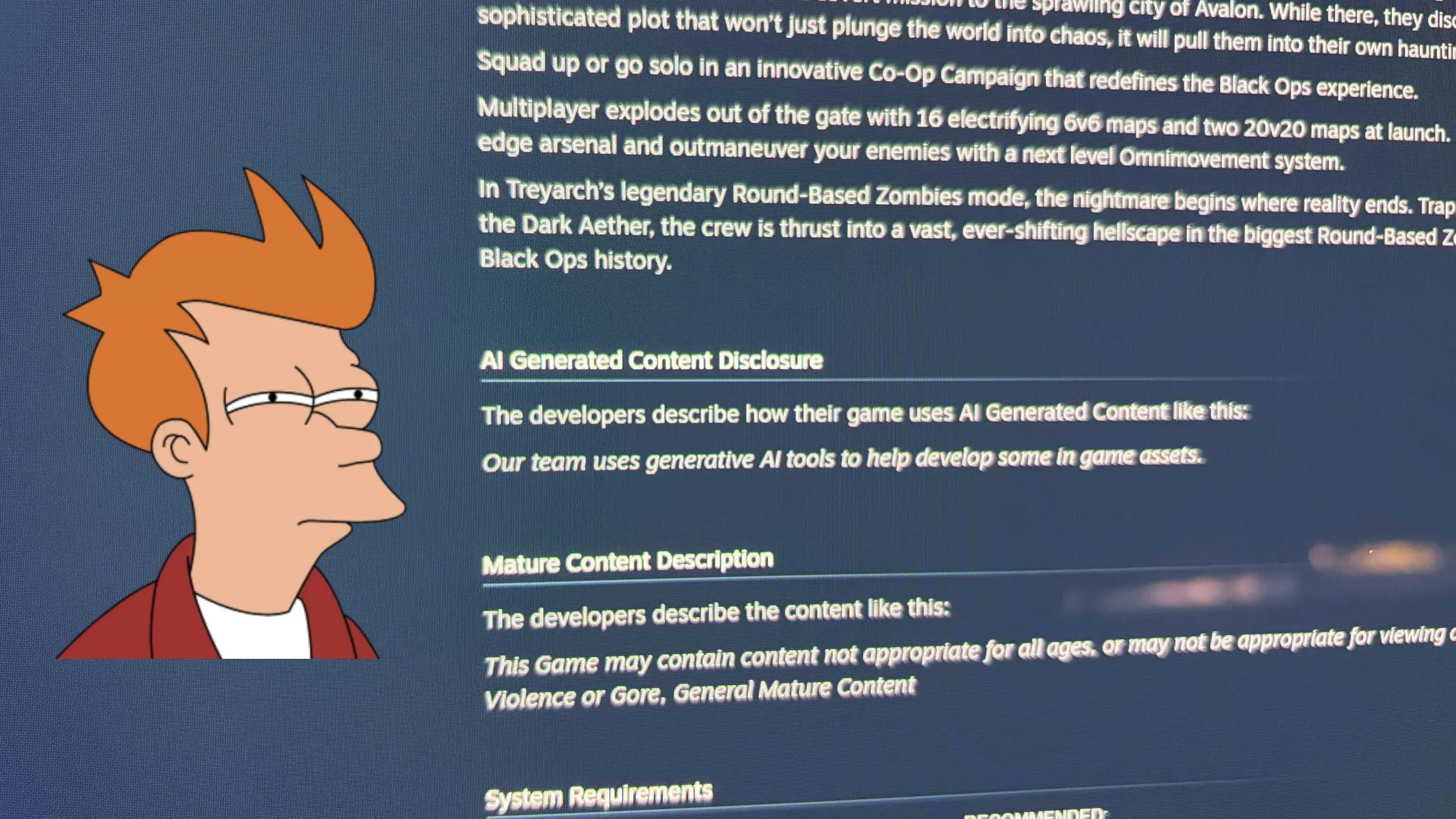
In an era where artificial intelligence is revolutionizing industries from healthcare to finance, the video game sector is experiencing a surprising backlash. A new study has revealed what researchers call the 'AI stigma' — a measurable consumer penalty that significantly reduces sales for games that prominently feature or are created with AI tools. The findings, which have stunned many in the industry, show that games marketed with AI elements can underperform by as much as 30% compared to those without such labels.
Conducted by a team of economists and gaming analysts, the study analyzed over 500 game releases across multiple platforms over the past two years. They compared sales data, user reviews, and marketing strategies to isolate the effect of AI disclosure. The results were stark: even after controlling for genre, budget, and review scores, titles that mentioned AI in their marketing materials saw a statistically significant drop in downloads and revenue.
The Methodology Behind the Numbers
To understand the scale of the 'AI stigma,' researchers used a combination of public sales data from platforms like Steam and the Epic Games Store, along with surveys of over 10,000 gamers. They classified games into three categories: those that explicitly advertised AI use (e.g., 'powered by AI,' 'AI-generated dialogue'), those that used AI subtly (e.g., procedural generation without marketing emphasis), and those that did not use AI at all.
The control group of non-AI games averaged strong sales figures, while the 'AI-explicit' group showed a 27% decline in revenue on average. Even the 'AI-subtle' group experienced a 10% drop, suggesting that consumer suspicion can extend beyond overt marketing. The study accounted for factors like franchise popularity, release timing, and critical reception, yet the stigma remained robust.
Consumer Perceptions and Trust Issues
Survey responses provided insight into why players avoid AI-tagged games. Many expressed concerns about quality, feeling that AI-generated content lacks the human touch that makes stories and characters compelling. Others cited ethical worries, such as the potential displacement of human artists and writers. 'I don't want to support a game that took shortcuts by using AI,' one respondent said. 'It feels hollow.'
Interestingly, younger gamers (ages 18–24) were slightly more accepting of AI, but still showed a significant negative reaction. The stigma was strongest among core PC gamers and those who regularly follow industry news. 'This isn't just a casual prejudice,' said Dr. Helena Voss, one of the lead researchers. 'It's a reasoned skepticism based on a growing awareness of AI's limitations and ethical problems.'
Historical Context: From Procedural Generation to Generative AI
The concept of using algorithms in game development is not new. For decades, developers have used procedural generation to create vast worlds — games like 'Minecraft' and 'No Man's Sky' rely heavily on algorithmic content creation. Yet those games were celebrated for their innovation, not stigmatized. So what changed?
The shift began with the rise of generative AI models capable of creating text, images, and even code. Tools like ChatGPT and Stable Diffusion allowed small teams to produce assets and narratives that previously required large staffs. However, this democratization came with quality concerns and ethical debates. High-profile controversies, such as the use of AI-generated voice acting or art in major releases, made headlines and sparked backlash. Players began to associate AI with cost-cutting, plagiarism, and soulless experiences.
Moreover, the perception of 'laziness' took hold. When a game proudly announces 'AI-generated dialogue,' it can be seen as a sign that the developer didn't invest in writers or performers. This contrasts with the appreciation for manual procedural generation, which is often viewed as a clever technical achievement rather than a replacement for human creativity.
Industry Reactions and Developer Dilemmas
Developers are now caught in a bind. Many small studios rely on AI to level the playing field against larger competitors. AI tools can speed up art creation, balance game mechanics, and even write dialogue. Yet as news of the study circulates, some studios are reconsidering how they talk about their use of AI.
'We used AI for early prototyping, but we removed all mentions of it from our store page after seeing early negative feedback,' said Mark Chen, a indie developer from Toronto. 'It feels dishonest, but we can't afford a 30% cut in sales.' This sentiment echoes across the industry, where marketing teams are increasingly advised to downplay or obfuscate AI integration. Some have even argued for a complete ban on AI labels in game descriptions, though that raises transparency issues.
Major publishers are also taking note. Several AAA companies that had been vocal about AI adoption have quietly shifted their messaging, focusing instead on 'human-crafted' elements. The stigma is even affecting hiring, with some artists and writers refusing positions at studios known for heavy AI use.
Case Studies: Successes and Failures
To illustrate the stigma's impact, the study highlighted specific case studies. One high-profile RPG that touted its AI-driven NPC conversations saw its sales fall 35% below analyst expectations, despite strong reviews. Meanwhile, a similarly budgeted game with no AI marketing outperformed its projections by 20%. Another example involved an adventure game that used AI for environmental art but never disclosed it; it performed average. When a leak revealed the AI use, sales flatlined and user reviews turned negative.
Conversely, a handful of titles have successfully used AI without backlash, often by positioning it as a tool for accessibility or modding. For instance, a simulation game that used AI to generate custom user content was praised for empowering players. The difference seems to lie in the framing: when AI is presented as a means to expand player creativity rather than replace developers, it is accepted more readily.
The Broader Implications for the Gaming Industry
This study arrives at a time when the gaming industry is already grappling with layoffs, rising costs, and skepticism toward corporate practices. The 'AI stigma' adds a new layer of complexity. It suggests that transparency about AI may be financially damaging, which could lead to a lack of honesty between developers and consumers. This dynamic risks eroding trust further.
Some analysts believe the stigma may diminish over time as AI technology improves and becomes more integrated into daily life. However, the current data indicates that for now, developers must tread carefully. The challenge is to harness AI's benefits without triggering consumer rejection — a delicate balance that may require new marketing strategies, educational campaigns, or even industry-wide standards.
As the debate continues, one thing is clear: the 'AI stigma' is not just a niche concern. It has real, measurable economic consequences that will shape the future of game development. Developers, publishers, and platform holders will need to work together to address the root causes of this distrust, whether through better quality control, transparent communication, or ethical guidelines for AI use.
Source:Windows Central News