
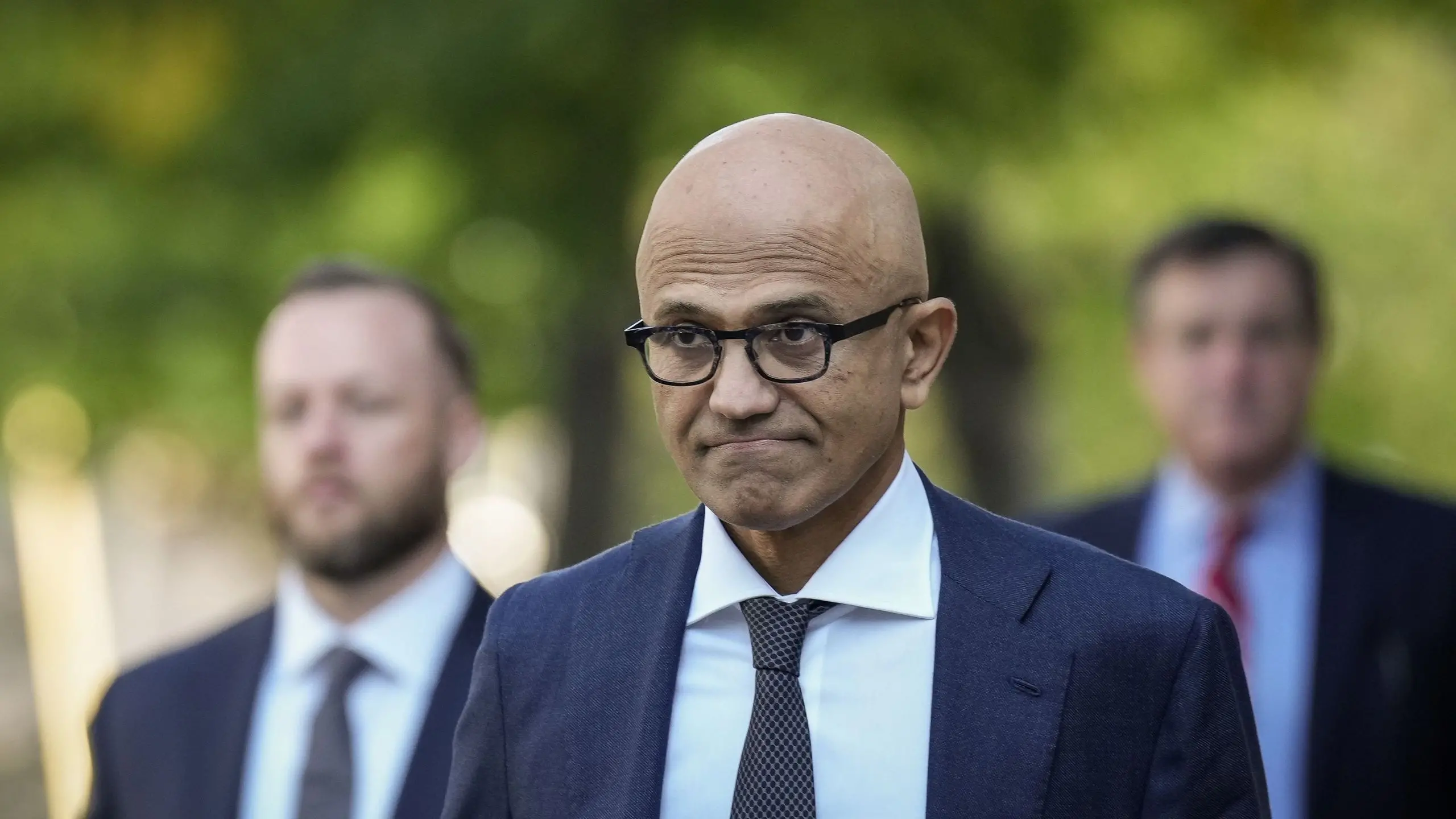
In a recent address, Microsoft CEO Satya Nadella delivered a powerful message about the future of artificial intelligence (AI) and its potential to reshape the global economy. He cautioned that without deliberate efforts to distribute the benefits widely, AI could concentrate wealth and power in the hands of a few large corporations, ultimately exacerbating inequality and undermining social stability.
The Core Message
Nadella’s remarks centered on the need for AI to be inclusive, accessible, and beneficial for all segments of society. He warned against what he described as a scenario where only a small number of powerful firms 'eat up the economy' by leveraging AI to dominate markets and capture disproportionate value. The Microsoft CEO emphasized that the technology must be harnessed in ways that foster broad-based economic growth, create new opportunities, and empower individuals and small businesses.
Context and Background
Nadella’s statements come at a time when AI development is accelerating rapidly, led by a handful of tech giants including Microsoft, Google, Amazon, and OpenAI. Microsoft has invested heavily in AI through its partnership with OpenAI, the creator of ChatGPT, and has integrated AI capabilities into its products like Azure, Office 365, and Bing. However, Nadella’s warning suggests that even as Microsoft pursues aggressive AI strategies, the company recognizes the dangers of an AI monoculture dominated by a few players.
The concentration of AI power is a growing concern among policymakers, economists, and ethicists. They fear that the massive training costs, data requirements, and computational resources needed for cutting-edge AI systems create significant barriers to entry. This could lead to a winner-takes-all dynamic where a few companies capture most of the economic gains, while workers, communities, and smaller competitors are left behind. Nadella’s comments align with calls for more distributed and democratic approaches to AI development, such as open-source models, public investment in AI research, and regulatory frameworks that promote competition and consumer protection.
Nadella’s Vision for AI
Throughout his tenure as CEO of Microsoft, Nadella has championed a philosophy of 'empowerment' rather than 'disruption'. He has consistently emphasized the importance of technology as a tool for inclusion and economic opportunity. In his recent remarks, he extended this philosophy to AI, arguing that the technology must be 'ubiquitous' and 'democratized' to ensure its benefits are widely shared. He pointed to examples such as AI-powered tools for education, healthcare, and small businesses, which can level the playing field and help underserved populations.
Nadella also highlighted the role of governments and civil society in shaping AI’s trajectory. He called for robust public-private partnerships to develop AI applications that address societal challenges, from climate change to disease detection. He urged regulators to create frameworks that encourage innovation while mitigating risks, such as algorithmic bias, job displacement, and loss of privacy. The Microsoft CEO stressed that the debate about AI should not be solely about regulation or profit, but about building a future where every person and organization can benefit from the technology.
Industry and Analyst Reactions
Nadella’s comments have generated significant discussion within the tech industry. Some analysts praised his stance as a recognition of the broader social responsibilities of tech leaders. Others noted that it represents a strategic positioning for Microsoft, which has increasingly positioned itself as the 'good actor' in the AI landscape, contrasting with competitors who might prioritize profit over people. However, critics pointed out that Microsoft itself is one of the companies that stands to benefit enormously from AI, and that its actions—such as its exclusive partnership with OpenAI—could contribute to the very concentration Nadella warns against.
The debate reflects a broader tension within the technology sector: how to balance the drive for innovation and competitive advantage with the need for ethical and equitable outcomes. Many experts argue that without intentional design and governance, AI will naturally concentrate power in the hands of those who already have the most resources. They point to historical precedents with other transformative technologies like the internet, where early hopes of democratization gave way to dominance by a few large platforms.
The Path Forward
Nadella’s speech also outlined specific steps Microsoft is taking to promote inclusive AI. These include investments in AI literacy programs, partnerships with non-profits and educational institutions, and the development of AI tools that are accessible to developers and businesses of all sizes. Microsoft has also launched initiatives to use AI for social good, such as projects focused on accessibility, environmental sustainability, and humanitarian response. The company has committed to ethical AI principles and has set up internal governance structures to ensure its products adhere to responsible AI practices.
However, Nadella acknowledged that no single company can solve the challenge alone. He called for a concerted effort across the entire ecosystem, including start-ups, academia, governments, and civil society organizations. He envisioned a future where AI is as pervasive and democratized as electricity or the internet, serving as a platform for innovation and opportunity rather than a source of concentrated power.
Broader Implications for the Economy
The potential for AI to 'eat up the economy' is not just a rhetorical flourish. Economic research suggests that AI could automate a significant share of tasks in many industries, leading to job displacement and wage polarization if the gains are not widely shared. At the same time, AI could generate enormous productivity gains and new types of work, if the transition is managed well. The key, Nadella argued, is to ensure that the benefits of AI are distributed broadly, through policies such as investments in education and training, social safety nets, and progressive taxation.
Nadella’s warning also taps into a growing public anxiety about AI. Surveys show that many people are worried about AI’s impact on jobs, privacy, and social control. By acknowledging these fears and calling for inclusive development, Nadella is attempting to build public trust in AI while also positioning Microsoft as a leader in responsible innovation. Whether this approach will be sufficient to prevent the negative outcomes he warns about remains to be seen, but his comments have reframed the conversation around AI from one of technical possibilities to one of societal choices.
In conclusion, Nadella’s message is a reminder that the future of AI is not predetermined. It will be shaped by the decisions that companies, governments, and individuals make today. The question is whether we will harness AI to build a more inclusive and prosperous society, or allow it to become another source of division and concentration of power. As Nadella put it, the goal should be AI that benefits everyone—not just a few powerful firms. This vision is both a challenge and an opportunity for the global community.
Source:Windows Central News