

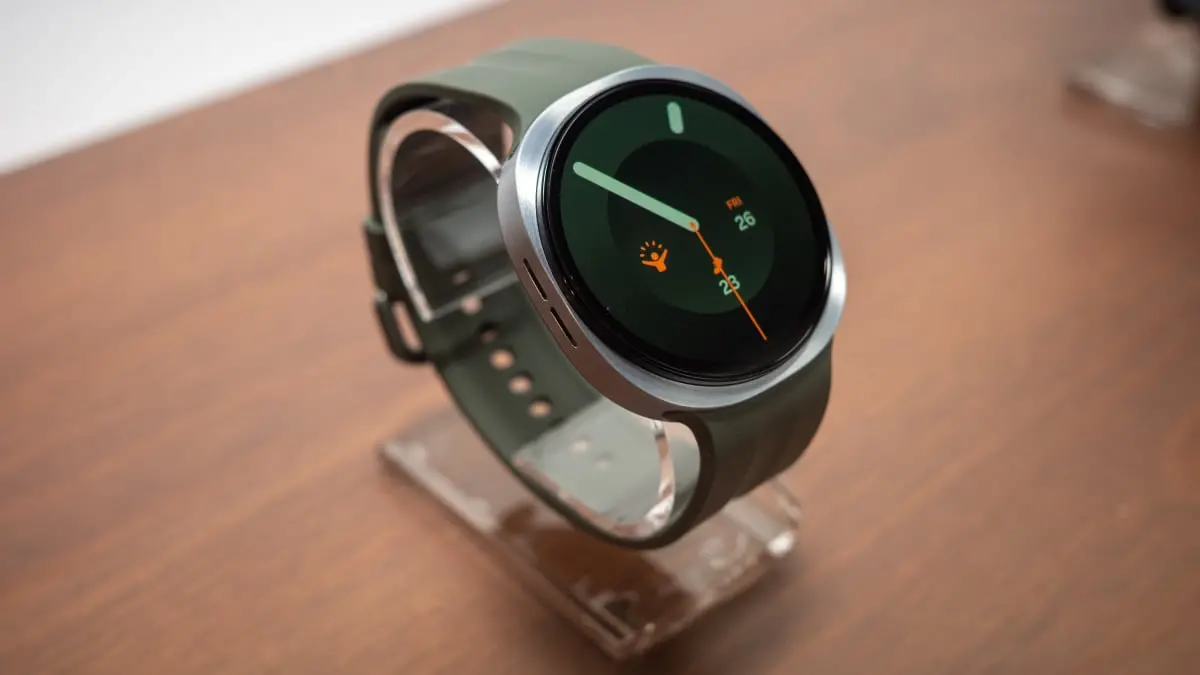
Samsung Galaxy Watches now detect when you're going to get sick
Samsung has quietly rolled out a new health monitoring feature on its latest Galaxy Watch models (the Watch 9 and Watch Ultra 2) that aims to predict when you're about to fall ill. Using a combination of heart rate variability, skin temperature, blood oxygen levels, and activity patterns, the watches can send a push notification saying something like, 'Your body may be fighting an infection.' The feature is part of the Samsung Health app's latest update, which also includes a redesigned interface and deeper integration with the company's Galaxy AI platform.
According to Samsung, the algorithm works by establishing a personal baseline for each user over the first few days of wear. Once the baseline is set, any significant deviation—such as a sustained increase in resting heart rate combined with a slight fever detected via skin temperature—triggers a 'wellness alert.' The watch will then suggest taking a rest, drinking extra fluids, or checking your temperature with a dedicated thermometer. Samsung emphasizes that the feature is not a diagnostic tool and should not replace medical advice, but rather serve as an early indicator that something might be off.
How it compares to existing solutions
Samsung is not the first to enter this space. Fitbit introduced its 'Health Metrics' dashboard in 2020, which tracks breathing rate, heart rate variability, and skin temperature to spot signs of illness. Apple Watch followed in 2021 with its 'Walking Steadiness' and later 'Vitals' app in watchOS 10, which highlights unusual changes in health metrics. Garmin also offers a 'Body Battery' feature that can indicate stress or illness. What sets Samsung apart is the integration with Galaxy AI, which uses on-device machine learning to analyze patterns without sending raw health data to the cloud—a privacy advantage that the company is keen to highlight.
The timing of the rollout is strategic. With cold and flu season approaching, consumers are looking for ways to stay ahead of infections. Samsung's marketing materials frame the feature as a 'guardian angel on your wrist,' but early reviews suggest the alerts can be sensitive. Some users report getting notifications after a strenuous workout or a poor night's sleep—events that mimic early illness symptoms. Samsung says it is continuously fine-tuning the algorithm based on user feedback.
The science behind predictive health tracking
Predicting illness via wearables is rooted in the concept of 'biometric deviation.' The human body often gives subtle signals before overt symptoms appear. For example, heart rate variability (HRV) typically drops when the immune system is active. Skin temperature can rise slightly due to inflammation. Blood oxygen may dip if respiratory issues are brewing. Wearables that combine these metrics can catch these changes hours or even days before a person feels unwell.
Multiple studies have validated this approach. A 2023 study from Stanford University found that smartwatch data could predict COVID-19 infection up to 48 hours before symptom onset with 82% accuracy. Another study by the Scripps Research Translational Institute showed that resting heart rate increases were a reliable early marker for influenza. Samsung's algorithm builds on these findings but customizes them to individual baselines, which improves accuracy. However, the company has not published its own clinical trial results, raising questions about how well the feature works in real-world conditions.
Privacy and data handling
Health data is among the most sensitive information a user can share. Samsung's approach to privacy is to process all data locally on the watch or paired phone. The Galaxy AI model runs entirely on-device, meaning raw biometric data never leaves your personal devices. Only anonymized, aggregated statistics are used to improve the algorithm—and users must opt in to share that data. This is a contrast to Fitbit, which sends data to Google's servers, or Apple, which encrypts health data but still stores it in iCloud. Samsung hopes that this local-first design will appeal to privacy-conscious consumers.
Nevertheless, the feature still raises ethical questions. For instance, could insurance companies use such data to adjust premiums? Samsung says no, but the same data could be subpoenaed in legal cases. Additionally, false alarms could lead to unnecessary anxiety or medical visits. Samsung includes a disclaimer that the feature is for 'wellness purposes only' and not a medical device. But as these tools become more sophisticated, regulators may need to step in to define clear boundaries.
Expansion to other Samsung devices
The illness detection feature is currently exclusive to the Galaxy Watch 9 and Watch Ultra 2, but Samsung plans to bring it to older models via a software update later this year. The company is also exploring integration with its Galaxy Ring, a smart ring expected to launch soon. The ring could complement the watch by providing additional skin temperature data from the finger, which is often more accurate than wrist measurements. Samsung is also working on a similar feature for its Galaxy Buds, which could detect changes in body temperature through the ear canal.
In the long term, Samsung envisions a comprehensive health ecosystem where all its wearable devices collaborate to paint a complete picture of your health. The company has filed patents for algorithms that can detect not just illness but also stress, dehydration, and even early signs of chronic conditions like diabetes. However, those features are years away from hitting the market. For now, the illness detection is a meaningful step toward proactive health management.
Limitations and user experience
Despite the promise, the feature has some drawbacks. The most significant is that it requires consistent wear—removing the watch for even a few hours resets the baseline calculation. It also struggles with users who have irregular sleep schedules or high variability in daily activity, as the algorithm can mistake normal fluctuations for illness. Samsung recommends wearing the watch at least 20 hours per day for accurate results. Additionally, the feature is currently only available in select regions, with a global rollout expected by the end of the year.
User reviews on social media have been mixed. Some praise the early warnings, claiming they were able to rest and avoid full-blown sickness. Others dismiss it as a gimmick that leads to hypochondria. Samsung has responded by adding a 'learning mode' that gives the algorithm two weeks to understand your patterns before sending any alerts. The company is also crowdsourcing feedback to reduce false positives. In a competitive wearable market, the success of this feature could hinge on Samsung's ability to balance sensitivity with specificity.
The bigger picture: wearables as health sentinels
The addition of illness detection to Samsung's smartwatches is part of a broader trend in which wearables evolve from fitness trackers to proactive health monitors. Apple Watch already includes ECG, fall detection, and blood oxygen monitoring. Fitbit offers stress management and sleep tracking. Garmin focuses on endurance athletes. Samsung's move to highlight immune health is a clear attempt to differentiate itself in a crowded market. By leveraging AI to interpret data rather than just display it, Samsung is positioning itself as a leader in predictive health.
However, the industry still faces challenges. Accuracy improvements require vast amounts of training data, which raises privacy concerns. And the regulatory landscape is fragmented—the FDA has cleared some wearable features but not others. Samsung's illness detection does not require FDA clearance because it is marketed as a wellness tool, not a medical device. But as the line between wellness and medicine blurs, consumers should remain informed about what these alerts actually mean. A notification saying 'you might be getting sick' is not a diagnosis—it's a prompt to pay attention to your body.
In conclusion, Samsung's new feature is a notable addition to the smartwatch health suite, but it's important to view it as a complement to, not a replacement for, traditional healthcare. The watch can tell you when something seems off, but only a doctor can tell you what it is. As the technology matures, we can expect even more sophisticated predictions—and even more responsibility for users to interpret and act on the data.
Source:Mashable News