

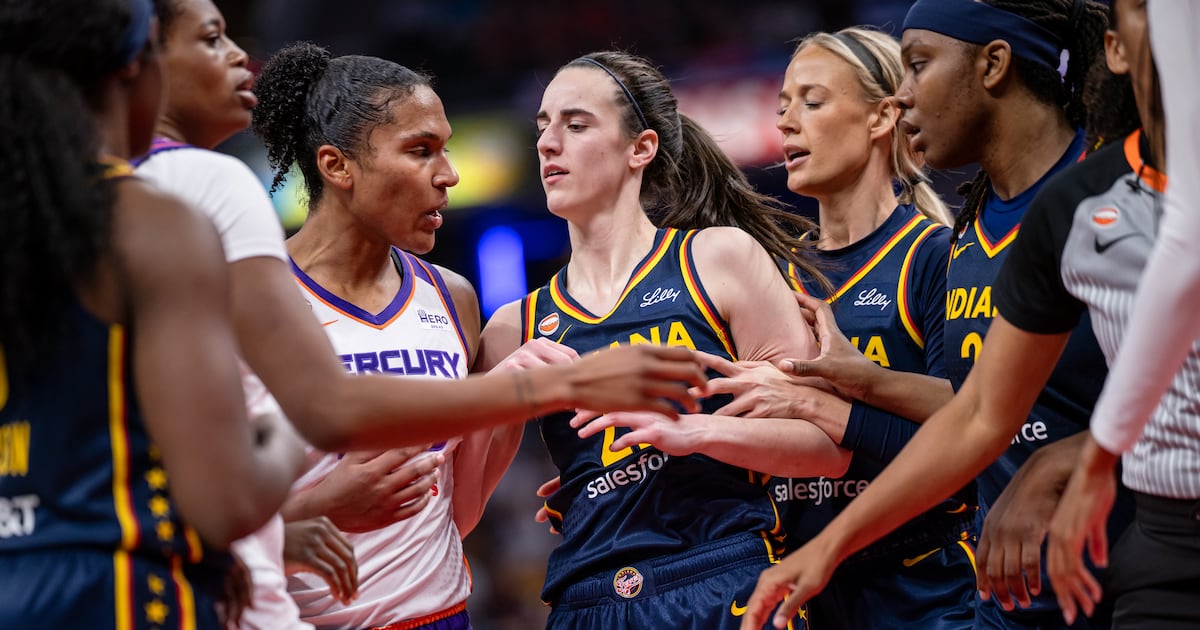
The world of women’s basketball was rocked by a controversial incident on June 24, 2026, when Phoenix Mercury forward Alyssa Thomas and Indiana Fever guard Caitlin Clark collided while diving for a loose ball. As both players scrambled on the floor, Thomas placed her hand on Clark's neck in what was later deemed a reckless act. No foul was called during the game, which the Fever won 111–109, but Clark left early with a back injury and did not return.
Initially, WNBA Commissioner Cathy Engelbert was reportedly inclined not to suspend Thomas. However, multiple sources told Tom Friend of the Sports Business Journal that NBA Commissioner Adam Silver intervened, advocating for a disciplinary action. Thomas ultimately received a one-game suspension and a flagrant-2 foul for “recklessly striking the throat” of Clark. The decision came a day after the game, sparking a firestorm of debate about the consistency of league discipline and the influence of the NBA over the WNBA.
The conflict between Thomas and Clark is not an isolated event. The two met earlier in the season, and tensions have simmered as Clark, the college phenom turned WNBA rookie, continues to dominate headlines. Thomas, a seasoned veteran known for her defensive tenacity, expressed shock at the backlash. Following the suspension, Thomas revealed she had been subjected to racist insults and death threats. “It’s unfortunate that things have come to this because of basketball,” Thomas told reporters on June 30. “A lot of us—myself included—didn’t even know this action had taken place until after the game. Now, we’re being portrayed as thugs. We’re receiving death threats. That is completely unacceptable. This needs to change in this league, and I’m really tired of it.”
The incident has reignited discussions about the visibility of the WNBA, the treatment of Black female athletes, and the role of the NBA commissioner in league affairs. Thomas’s comments highlighted how quickly a basketball play can escalate into racial harassment online and in public forums. Her frustration reflects a broader pattern within professional sports, where players of color often face disproportionate online abuse after on-court incidents.
Caitlin Clark, who has quickly become the face of the WNBA’s new generation, also spoke out against the abuse directed at Thomas. “As I’ve said before, harassment and hate are never acceptable,” Clark stated on July 3. “That goes for the opposing team we play. That goes for my teammates. That goes for my coaches. Character should never be questioned. I’ve always said that loud and clear, and I genuinely believe it. That’s how I was raised.” Clark’s response underscored her commitment to sportsmanship and friendship across rivalries.
The WNBA has long struggled with balancing player safety and competitive physicality. The league’s disciplinary record has been inconsistent; some flagrant fouls have gone unpunished, while others drew immediate suspensions. The Thomas-Clark affair is the latest in a series of actions where the league’s response seemed influenced by external factors. In this case, Silver’s alleged involvement adds a new layer of controversy. Critics question whether the WNBA should retain full autonomy over its disciplinary processes or whether the NBA’s oversight is necessary for high-profile incidents.
Alyssa Thomas’s career has been marked by resilience and tenacity. Drafted in 2014 by the Connecticut Sun, she became a three-time All-Star and one of the league’s best defenders. Known for her relentless motor and tough on-ball defense, Thomas helped guide the Sun to multiple deep playoff runs. After being traded to the Phoenix Mercury in 2024, she continued to be a cornerstone on a team featuring veteran stars like Diana Taurasi and Brittney Griner. Her style of play—physical and hard-nosed—has earned her comparisons to NBA defenders like Patrick Beverley. However, this style occasionally crosses the line, as seen in the Clark incident.
Caitlin Clark entered the WNBA in 2024 after an historic college career at Iowa, where she shattered scoring and assist records. Her rookie season aligned with a spike in WNBA viewership and attendance, partly due to her scoring exploits and polarizing persona. Clark’s ability to draw fouls and her on-court confidence made her a target for aggressive defense, but also a lightning rod for debates about race, privilege, and sportsmanship. The Thomas incident only intensified those conversations.
The league’s handling of the situation has drawn criticism from both sides. Some believe Thomas’s suspension was too harsh given that no foul was called in real time. Others argue that the league needed to send a clear message about protecting players from dangerous plays. The intervention of NBA Commissioner Adam Silver—if true—raises questions about the WNBA’s independence. Silver has always shown strong support for the WNBA, championing its growth and investment. But his involvement in a specific disciplinary matter could set a precedent for future decisions.
On the court, Thomas’s absence for one game affected the Mercury’s rotation but did not alter their season trajectory. The Mercury finished the 2026 season in fourth place in the Western Conference, with Thomas averaging 14.5 points, 8.2 rebounds, and 6.1 assists per game. Clark’s Fever, meanwhile, missed the playoffs despite a strong finish, with Clark averaging 25.3 points and 8.9 assists in her second season.
Beyond the players, the incident has prompted calls for better mental health support and anti-harassment protocols within the WNBA. The league has a zero-tolerance policy for abuse, but enforcement remains challenging in the age of social media. Both Thomas and Clark have used their platforms to advocate for change, urging fans to focus on the game rather than personal attacks.
As the 2026 season concluded, the shadow of this controversy lingered. Neither Engelbert nor Silver commented on the report, leaving speculation to swirl. For now, the Thomas-Clark incident serves as a reminder of the fine line between competitive fire and dangerous play, and the powerful influences that shape disciplinary outcomes in professional sports. The evolution of the WNBA may depend on how it navigates these challenges while upholding both player safety and fairness.
Source:RDS News