

The dream of buying a new computer at a reasonable price has taken yet another hit. This week, three of the biggest names in tech—Apple, Microsoft, and Valve—announced sweeping price increases that signal a fundamental shift in the hardware market. The culprit? A global shortage of memory and storage components, driven largely by the insatiable demand from artificial intelligence data centers. For consumers, the message is clear: high prices are not a temporary blip but the new baseline.
Valve's Steam Machine: A Console-Like PC at a Premium
Valve kicked off the week by finally revealing the price of its long-delayed Steam Machine, a console-like PC designed to bring PC gaming to the living room. The base model, equipped with 512GB of storage and no controller, starts at $1,049—nearly double the price of the six-year-old PlayStation 5. A bundled controller adds $79, and the 2TB version tacks on another $300. For context, the PS5 launched at $499.99 in 2020, and even adjusted for inflation, the Steam Machine's pricing feels steep.
Valve had previously warned that the component crisis forced it to revise its pricing plans. In a recent interview with PC Gamer, Valve engineer Yazan Aldehayyat stated that if he could change one thing about the Steam Machine, it would be to "make it cheaper." While the company hasn't disclosed its original target price, industry insiders estimate it was around $250 to $300 lower, putting it in the $750 to $800 range. The current pricing, however, reflects the reality of competing with hyperscalers for limited RAM and SSD supplies.
Microsoft's Surface Lineup: Cheaper but with Compromises
Microsoft introduced new, cheaper options for its Surface devices this week, but they come with a significant trade-off. The 12-inch Surface Pro now starts at $849, and the 13-inch Surface Laptop at $949—both $200 less than the previous base models. However, Microsoft cut the RAM in half, dropping from 16GB to 8GB. This reduction is a direct response to skyrocketing memory prices. Earlier this year, Microsoft had raised prices on its Surface devices, with the Pro and Laptop jumping to $1,049 and $1,199 respectively. The new lower-priced models aim to provide an entry point, but the performance hit from reduced RAM may deter power users.
The decision to offer 8GB configurations is reminiscent of the 2010s, when many laptops shipped with 4GB as standard. For basic tasks like web browsing and document editing, 8GB may suffice, but for multitasking, programming, or creative work, it's a noticeable downgrade. Consumers now face a binary choice: pay more for 16GB or accept a less capable machine.
Apple's Widespread Price Hikes
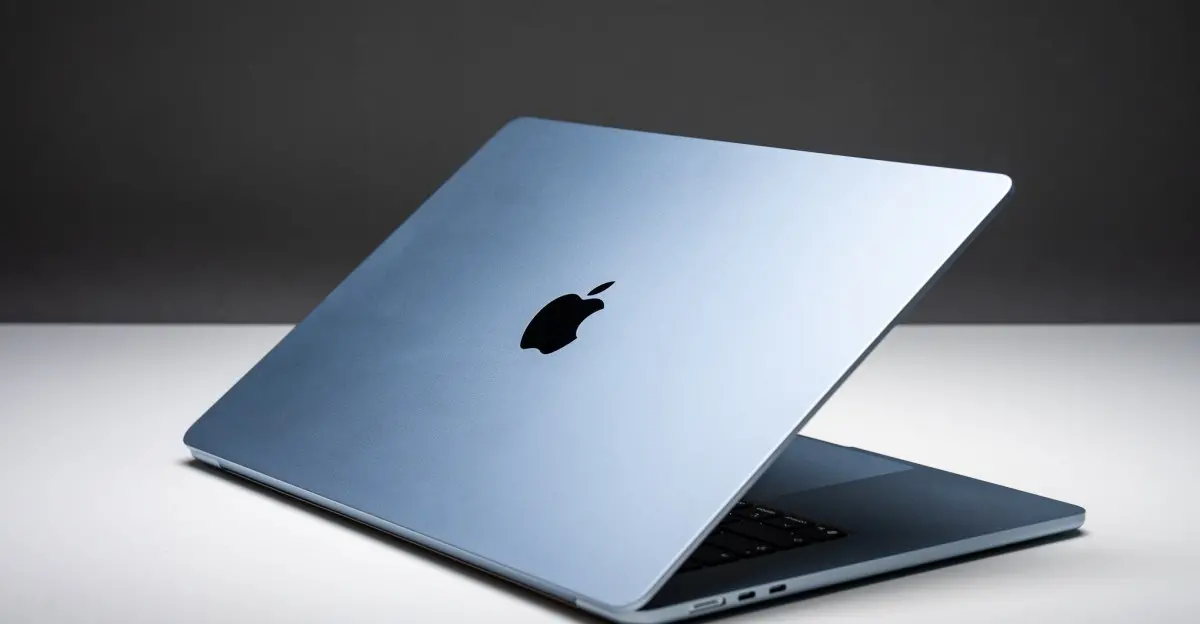
Apple, a company renowned for its supply chain mastery, also succumbed to component cost increases. In a sweeping announcement, Apple raised prices across its MacBook, iPad, HomePod, and Apple TV lines. The MacBook Neo, previously a steal at $599, now starts at $699—a $100 increase. Other models saw similar jumps: the MacBook Air now costs $1,099 (up from $999), and the iPad Pro increased by $50 to $100 depending on configuration.
In a statement to Bloomberg, Apple attributed the hikes to "component cost increases at a scale we have never seen," specifically pointing to the data center boom. Unlike Microsoft, Apple did not cut RAM to offset costs. Instead, it passed the full expense to consumers. This is a rare move for Apple, which typically absorbs minor cost fluctuations. The fact that it's raising prices suggests the shortage is more severe than previous cycles.
Xbox Series S Price Surge
Microsoft also announced a price increase for its Xbox Series S console, which has been on the market for six years. The Series S now starts at $499.99—a $100 increase. In a blog post, Microsoft explained that "console storage and memory prices have increased by more than 2.5x and we expect another doubling by the fall of 2027." This is a stunning admission from a company that has historically subsidized console hardware to drive software and service sales. The Series S was originally positioned as a budget-friendly entry point into next-gen gaming, but the new price puts it in direct competition with the more powerful PlayStation 5.
The cumulative effect of these announcements is a stark reminder that the AI boom has real-world consequences for everyday consumers. The large-scale data centers being built by Amazon, Microsoft, Google, and others to power AI models like ChatGPT, Gemini, and Copilot consume vast quantities of NAND flash memory and DRAM. These components are the same ones used in consumer devices—SSDs and RAM sticks. When a hyperscaler bids for millions of chips, smaller buyers like PC manufacturers are left scrambling for scraps.
The Mechanics of the Shortage
To understand the price hikes, one must look at the memory supply chain. The global production of DRAM and NAND flash is dominated by a handful of companies: Samsung, SK Hynix, Micron, and Kioxia. These manufacturers have been ramping up production of high-bandwidth memory (HBM) used in AI accelerators, diverting capacity away from consumer-grade chips. Additionally, new fabrication facilities take years to build and require billions in investment. The industry is currently in a supercycle, where demand from AI dwarfs all other segments.
According to market research firm IDC, spending on AI infrastructure is expected to exceed $200 billion in 2026, up from $120 billion in 2025. A significant portion of that budget goes to memory. Valve's Aldehayyat said that if his company doesn't accept the offered prices, suppliers "never talk to us again." This blunt assessment reveals the extreme bargaining power of hyperscalers.
For consumers, this means that even a modest PC upgrade now costs significantly more. A 1TB NVMe SSD that cost $80 two years ago now sells for $130. A 16GB RAM kit has jumped from $40 to $80. The price of building a gaming PC has risen by 30% to 50% over the past 18 months, according to PCPartPicker data. Pre-built systems have followed suit.
Historical Context and Future Outlook
Memory shortages are not new. The industry has experienced cyclical booms and busts for decades. However, the current shortage is unique in its severity and duration. Previous cycles were driven by supply-side disruptions (like factory fires) or temporary demand spikes (like the pandemic-era PC boom). This time, the demand is structural and likely to persist for years. Hyperscalers are not just buying for immediate needs; they are building capacity for future AI workloads that may be ubiquitous.
Analysts at Gartner predict that memory prices will remain elevated through at least 2028, as new fabrication capacity comes online slowly. Meanwhile, consumer demand for PCs and tablets is expected to remain stable, meaning prices are unlikely to drop anytime soon. The only potential relief could come from a slowdown in AI investment, but that seems improbable given the current fervor.
For those in the market for a new computer, the advice is to either wait—though the wait may be long—or accept the higher cost. Some retailers are offering trade-in programs or financing options to soften the blow. But for many, the dream of an affordable, powerful new device is on hold. As Apple's statement implies, we are entering a new era where even the most efficient supply chains cannot shield consumers from the consequences of the AI gold rush.
From Valve's Steam Machine to Apple's MacBook Neo, the stickers on the shelf reflect a world where every component is contested. The big data center buildout is not just reshaping the tech industry; it is reshaping the very cost of computing. And for now, there is no end in sight.
Source:The Verge News