

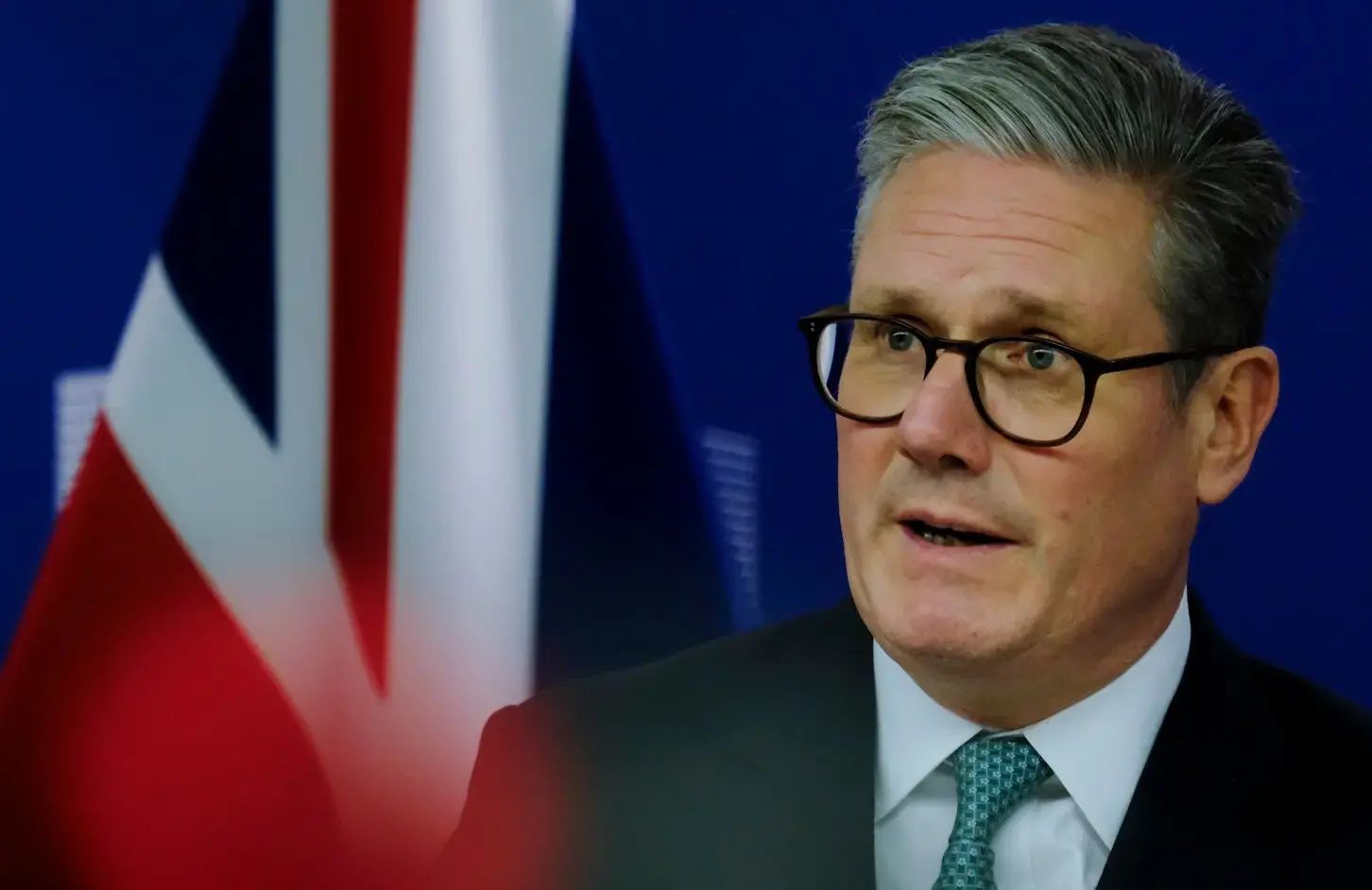
When Keir Starmer became leader of the Labour Party in April 2020, few could have predicted the turbulent political landscape that lay ahead. For the UK tech sector, a community that thrives on stability, talent, and investment, Starmer's tenure has been a mixed bag of cautious optimism, missed opportunities, and emerging signals. This article delves into how the UK tech industry might remember Sir Keir Starmer, analysing his policy proposals, interactions with innovation hubs, and the broader context of his leadership.
Background and rise to prominence
Keir Starmer entered parliament in 2015 as the MP for Holborn and St Pancras. Before politics, he built a formidable career as a human rights lawyer, serving as Director of Public Prosecutions from 2008 to 2013. This legal background gave him a reputation for meticulousness, caution, and a deep respect for institutional processes—traits that have both helped and hindered his appeal in the fast-paced world of technology.
Upon becoming Labour leader, Starmer inherited a party that had lost four consecutive general elections and was deeply divided over Brexit and internal factionalism. The tech industry, meanwhile, was grappling with the aftermath of the 2016 referendum, the rise of fintech, and the need for a clear digital strategy. Many hoped Starmer would bring a more pragmatic, evidence-based approach to technology policy compared to his predecessor.
Starmer's tech policy framework
Throughout his leadership, Starmer has emphasised the importance of science, innovation, and sustainable growth. He appointed Peter Kyle as Shadow Secretary of State for Science, Innovation and Technology, a move seen as signalling a serious commitment to the sector. Key policy announcements have included pledges to increase R&D spending to 3% of GDP, create a National Innovation Council, and establish a state-owned British Energy Generation company to drive net-zero technologies.
However, critics note that many of these commitments lack detailed implementation plans. The tech community values specificity—how will the 3% target be reached? What mechanisms will support early-stage deep tech startups? While Starmer has spoken about 'security, prosperity, and fairness', translating these into concrete policies for AI, quantum computing, and digital infrastructure remains a work in progress.
Engagement with the startup ecosystem
Starmer has made several visits to tech hubs, including London's Tech City, Manchester's Northern Quarter, and Bristol's robotics cluster. He has met with founders from fintech, healthtech, and edtech sectors. These interactions have been generally well-received, with attendees noting his willingness to listen and his thoughtful questions. Yet, some founders have expressed frustration that Labour under Starmer has not been more vocal in defending the sector against regulatory headwinds from the current Conservative government.
One area of particular interest is the government's Online Safety Bill, which places heavy compliance burdens on platforms. Starmer's Labour has broadly supported the bill but pushed for amendments to protect freedom of speech and innovation. This balancing act reflects his legal background—a desire to shield citizens from harm without stifling creativity. Whether this nuanced position resonates with tech entrepreneurs who favour minimal intervention remains to be seen.
Brexit and talent
A defining issue for the UK tech sector post-2016 has been access to talent. The loss of freedom of movement has made it harder to recruit skilled engineers from Europe. Starmer has been a consistent critic of the hardest forms of Brexit but has accepted that the UK will not rejoin the single market or customs union soon. Instead, he has called for a better immigration system for scientists and innovators, including a 'fast track' visa scheme and the expansion of the Global Talent Visa.
These proposals are welcome but lack the ambition many in tech desire. The sector has lost an estimated 200,000 EU-born workers since the referendum. While Starmer cannot reverse the referendum result, he could champion more radical changes, such as extending the Youth Mobility Scheme to EU countries or creating a 'tech passport' for entrepreneurs. So far, his stance has been cautious, perhaps reflecting political constraints.
Investment and industrial strategy
The UK has one of the most vibrant venture capital ecosystems in Europe, but concerns about late-stage funding and scale-up support persist. Starmer has argued for a modern industrial strategy that includes a 'Green Industrial Revolution', with billions in new investment for clean tech, battery production, and hydrogen. He also supports the creation of a National Investment Bank to crowd in private capital for infrastructure projects.
However, tech leaders often point out that the UK's R&D tax credit system is complex and sometimes unpredictable. Labour under Starmer has not yet committed to streamlining these credits or extending them to capital-intensive startups. A focus on 'levelling up' has also prompted questions about how to support tech clusters outside London without pulling resources from the capital. The answer, many hope, lies in a more decentralised approach that builds on existing strengths in Edinburgh, Cambridge, and Oxford.
AI and digital regulation
Artificial intelligence is a top priority for any modern government. Starmer's Labour has endorsed the need for a coherent AI strategy, including a regulatory 'sandbox' approach similar to the UK's Financial Conduct Authority. He has warned against both over-regulation and laissez-faire attitudes, advocating for a 'pro-innovation' framework that also addresses bias, accountability, and ethical concerns.
This pragmatic middle ground may appeal to many in the AI community who are wary of heavy-handed European-style regulation. Yet, some developers feel that the party has not sufficiently grappled with the existential risks of advanced AI, nor with the need for massive investment in compute infrastructure. The shadow team's white papers on technology are detailed but sometimes lack the boldness that the moment demands.
Education and skills pipeline
No discussion of tech memory can ignore the education system. Starmer has pledged to reform technical education, expand apprenticeships, and ensure that digital skills are embedded across the curriculum. He has also backed the continued upscaling of AI and data science university programs. While these goals are shared by many, the challenge lies in implementation.
UK tech firms report persistent skills shortages, especially in cybersecurity, cloud computing, and machine learning. Starmer's plan to create a 'National Retraining Scheme' and 'Skills England' is a step in the right direction, but it will require significant funding and cross-party cooperation. The shadow chancellor, Rachel Reeves, has stressed fiscal responsibility, which may limit the scale of educational investment in the short term.
Critical voices from the sector
Not everyone in tech is a fan. Some libertarian-leaning entrepreneurs see Starmer as part of the 'establishment' that is out of touch with the disruptive nature of technology. They criticise his support for higher taxes on large corporations and capital gains, which could hit startup equity compensation. Others argue that Labour's commitment to workers' rights, including the 'New Deal for Working People', might increase costs for small tech businesses that rely on flexible labour.
On the other hand, many scale-up founders appreciate Starmer's emphasis on sustainable business models and social impact. The growth of 'purpose-driven' tech companies, such as those focused on climate or mental health, aligns well with his rhetoric. The key, they say, is translating that rhetoric into practical support without adding bureaucratic burdens.
Comparisons to other Labour leaders
How does Starmer compare to previous Labour figures? Tony Blair was closely associated with the 'Cool Britannia' era, actively courting tech entrepreneurs and hosting receptions at No. 10. Gordon Brown, while less flashy, was instrumental in promoting financial technology and London's position as a global financial centre. Jeremy Corbyn, Starmer's predecessor, was perceived as hostile to private enterprise and thus largely ignored by the tech sector.
Starmer sits somewhere in between—more business-friendly than Corbyn, less charismatic than Blair, but with a solid managerial reputation. For a tech community that values competence and predictability, this could be advantageous. But in a rapidly changing world, 'safe' may not be enough to inspire the bold investments and product innovations that the UK needs.
The road ahead
If Starmer becomes Prime Minister at the next general election, the tech industry will immediately test his promises. Key early actions would include the establishment of the National Innovation Council, the allocation of R&D funds, and the simplification of visa processes. The sector will also watch how Labour navigates the evolving relationship with the European Union, particularly regarding data adequacy and digital trade.
Should he remain in opposition, his legacy may be that of a leader who laid the groundwork for a more systematic tech policy but failed to break through the noise. In either case, UK tech will likely remember Keir Starmer as a leader who took the industry seriously, if not always getting the details right. The real test will be whether he can turn cautious optimism into concrete action.
Source:UKTN News