
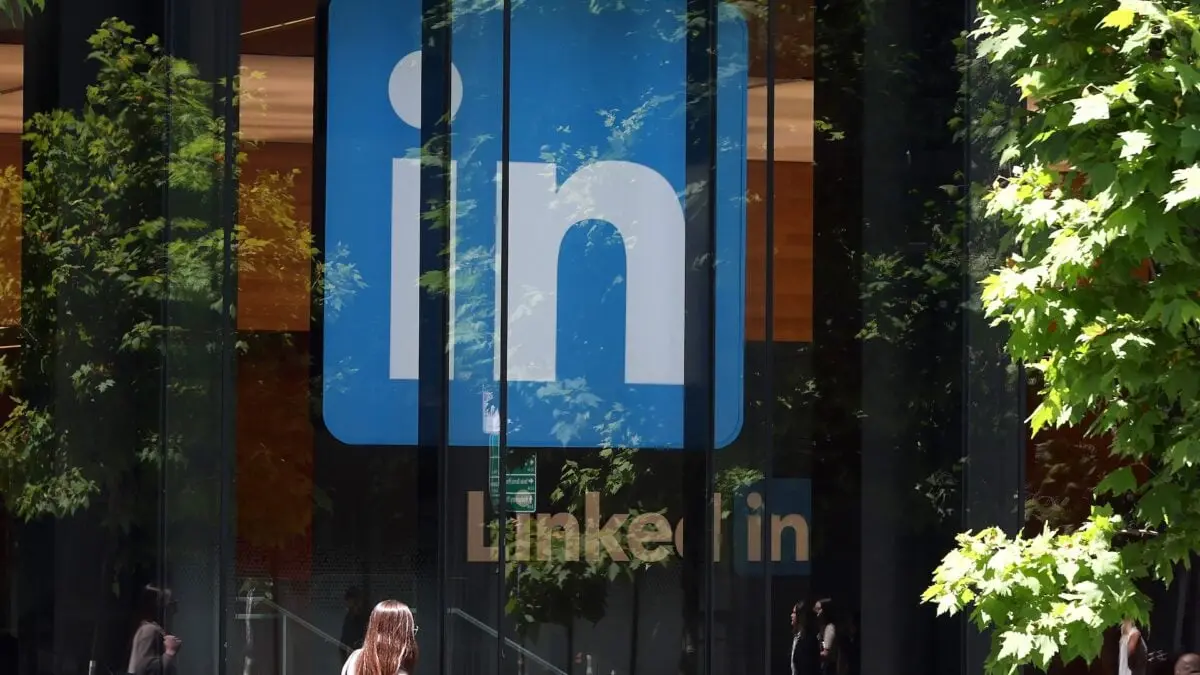
Pangram, the company behind one of the most widely used AI text detectors, has released a study attempting to quantify the prevalence of AI-generated content across social media platforms. The findings are striking: 41% of longform LinkedIn posts are flagged as fully AI-generated, while 30% of short-form content on the professional network shares the same label. This makes LinkedIn the most AI-saturated platform among those analyzed, raising significant questions about authenticity in professional networking spaces.
The study, which draws data from Pangram's Chrome extension that scans content as users browse the web, also examined other platforms. On Medium, 31% of longform articles are fully AI-generated. X (formerly Twitter) shows 29% of longform content as AI-generated, but the platform becomes even more saturated when considering hybrid human-AI contributions: only 53.2% of X articles are flagged as fully human-authored. In contrast, just 9% of standard short X posts are fully AI-generated. Reddit has 13% of longform writing and 3% of short-form posts flagged as AI. Substack reports the lowest longform AI rate at 10%, though short-form AI content on the platform is slightly higher at 12%.
The methodology relies on Pangram's detection algorithms, which are themselves a subject of debate. AI detection tools have been criticized for false positives and biases, particularly against non-native English writers. However, Pangram's study provides a consistent measuring stick across platforms, suggesting that the trends are real even if exact percentages may vary. The company's interest in publicizing these figures is not entirely altruistic—as the original article wryly notes, it is reminiscent of a toilet paper manufacturer announcing an epidemic of stains. Nevertheless, the data aligns with growing anecdotal evidence that AI-generated content is flooding social media, especially on professional networks where users may feel pressure to maintain a polished, authoritative presence.
LinkedIn has increasingly evolved from a simple job-hunting site into a content platform where users share insights, career advice, industry analyses, and personal stories. The rise of AI tools—such as ChatGPT, Claude, and Gemini—has made it easier than ever to produce such content quickly. Users can prompt an AI to draft a post about leadership lessons, productivity hacks, or industry trends, then publish with minimal editing. This practice undermines the platform's foundational promise of authenticity and genuine professional connection.
The implications extend beyond individual credibility. Employers and recruiters who use LinkedIn to vet candidates may encounter self-presentations that are heavily AI-generated, making it harder to assess a person's actual communication skills or thought processes. Similarly, thought leadership—long considered a key benefit of LinkedIn engagement—becomes less valuable when the 'thoughts' are generated by a language model rather than a human mind. The platform also depends on advertising and premium subscriptions; if user trust erodes due to an overwhelming volume of inorganic content, LinkedIn's business model could suffer.
Pangram's findings also highlight a broader societal challenge: the difficulty of distinguishing human-generated from AI-generated text. As models improve, detection may become nearly impossible without sophisticated watermarking or metadata solutions. Some platforms, including Meta and OpenAI, have experimented with AI labeling, but adoption remains inconsistent. On LinkedIn, there is no such labeling currently, which leaves users to guess whether a post is genuine or synthesized.
The study prompts reflection on the ethics of using AI to produce social media posts. While casual use of AI for grammar checking or brainstorming is generally acceptable, presenting entire AI-generated posts as one's own original work constitutes a form of deception, especially in a professional context. The New York Times recently wondered whether LinkedIn was becoming more interesting; the Pangram study suggests that any perceived increase in quality may be largely an illusion driven by AI. The question then becomes: as AI-generated content proliferates, can professional networking retain its value?
Beyond LinkedIn, the data for X and Reddit indicate that users on platforms known for brevity and real-time discussion are less likely to employ AI for short posts, but longform writing—which requires more effort—is increasingly outsourced to machines. This pattern aligns with the theory that AI serves as an efficiency tool for tasks people find tedious or time-consuming. However, when applied to personal expression on social media, it risks reducing the diversity of human voices to a homogenized AI style.
The Substack finding is interesting because it suggests that writers on that platform, which is often associated with independent, serious journalism, are relatively less reliant on AI for longform content. This may be because Substack's audience expects a strong personal voice and original analysis, making AI-generated work less acceptable. In contrast, LinkedIn's culture might be more tolerant of formulaic or templated content, as many posts already follow predictable formats (e.g., 'I learned X from Y' or 'Here's why Z matters').
Pangram's study is not peer-reviewed, and its reliance on extension data means it may not capture all content evenly. Users who employ the extension may be more tech-savvy and thus more likely to encounter AI content, skewing the sample. Nonetheless, the results are broadly consistent with other surveys. A 2024 poll by the Pew Research Center found that 55% of U.S. adults had encountered AI-generated content online without realizing it, and a 2025 study by Stanford University estimated that 38% of all longform web text in English could be AI-generated by 2027.
The trend is likely to accelerate as AI tools become more integrated into writing workflows. Microsoft, which owns LinkedIn, has been embedding AI features across its products, including Copilot in LinkedIn Premium. While Microsoft has not mandated AI disclosure, the company has acknowledged the need for transparency. In a 2025 blog post, LinkedIn's engineering team stated they were exploring 'methods to help users identify AI-generated content' but provided no timeline or specifics.
For now, the onus is on individual users to decide whether to disclose AI use. Some professionals have begun adding disclaimers such as 'Drafted with AI assistance' to their posts, a practice that could become standard as norms evolve. The broader question—how to maintain authenticity in an AI-mediated communication environment—will likely be a defining issue for social media platforms in the coming years.
In light of Pangram's data, users may want to critically evaluate the content they consume and produce on LinkedIn and other platforms. Relying heavily on AI for self-expression not only risks diminishing one's personal brand but also contributes to a digital ecosystem where genuine human interaction is increasingly rare. As the study shows, the problem is already substantial, and it is only expected to grow.
Source:Gizmodo News