
Headline
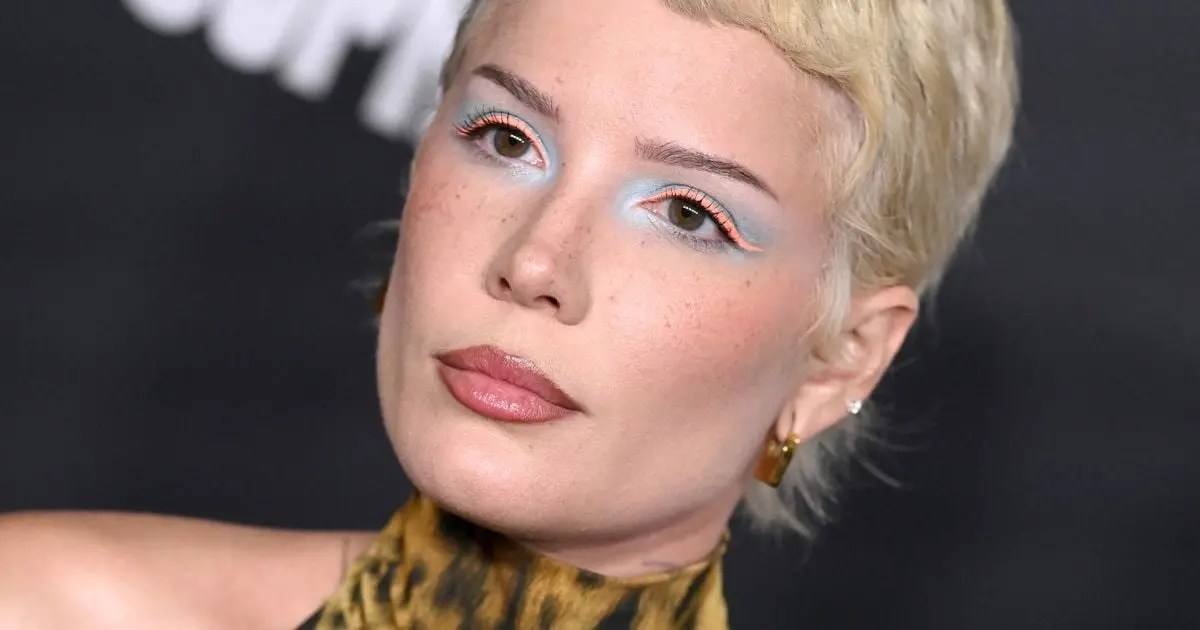
Halsey Calls Out Anthony Fantano Over Brutal Review: 'I Had Chemotherapy as an Excuse'
Key Facts
- Anthony Fantano's 1/10 review of Halsey's 2024 album The Great Impersonator resurfaced online over the weekend.
- Fantano quipped that the review was 'talked about more than the album,' prompting Halsey to hit back.
- Halsey responded by noting she was undergoing chemotherapy while making the album.
- The singer also accused Fantano of bullying and highlighted how women with health issues are often dismissed as attention seekers.
A Feud That Keeps Escalating
The tension between Halsey and Anthony Fantano is not new. For years, the pop star and the online critic have been locked in an increasingly hostile public standoff. What started as a scathing review has turned into a running battle that fans have compared to a pop culture version of Batman versus the Joker, with neither side willing to back down.
Fantano, who runs the popular YouTube channel The Needle Drop, has built a career out of being blunt. His channel has more than three million subscribers, and his opinions can make or break an album's conversation in a given week. For many music fans, his 1/10 score is a badge of shame, but for Halsey, it was a complete dismissal of deeply personal work.
The original conflict took place on October 30, 2024, when The Great Impersonator was released. Fantano published a scathing video review the same day, sparing no detail. He awarded the album a 'decent score of 1 out of 10,' a sarcastic phrase that immediately became a meme. He also said that 'many of these tracks resemble bad Halloween costumes' and that the record suffered from 'the worst case of main character syndrome' he had ever encountered on a pop album. He went on to say Halsey 'expects us to stand around in awe of her mediocrity' and described the listening experience as 'genuinely difficult and, frankly, laughable at times.'
At the time, Halsey did not respond directly to the review, but it clearly stayed with her. The backlash to Fantano's comments was immediate, largely because Halsey had been open about the circumstances behind the album. She was diagnosed with lupus and a rare T-cell lymphoproliferative disorder, and she had spent time in the hospital before recording. She also said she was 'lucky to be alive' after a period of serious illness. The album was written while she was undergoing chemotherapy, a fact that made Fantano's 'main character syndrome' jab feel particularly cruel to many of her fans.
Why the Review Is Being Discussed Again
Over the weekend, a social media user wrote that they did not agree with Fantano's approach to the Halsey review but did not understand why people still talked about it. Fantano saw the message and quoted it, writing that the review had been 'talked about more than the album.' It was a small, provocative jab, but it worked. Halsey came back with a response that quickly went viral.
'I am sure that my most forgettable song will be remembered longer and with more affection than anything you will ever do in your life,' she wrote. 'Everything you say is more whiny and provocative than anything I ever said on that album. But at least I had the excuse of chemotherapy.'
The comment was a direct hit at Fantano's suggestion that Halsey was being self-centered. She also made it clear that she was not upset about the negative score itself. In additional posts, she wrote: 'Who cares that he gave a bad review? What bothers me is that a click-baited YouTuber can pass himself off as a professional critic and call it main character syndrome for a female artist to talk about her medical suffering on an album that is, surprise, about her own life. He is a tyrant raised by 4chan. Yuck.'
Halsey then widened the conversation to discuss the way women are treated when they speak openly about health struggles. She explained that being a woman with severe health issues often means being afraid to tell the truth about pain because of the risk of not being believed or being accused of pulling a stunt for attention. 'He validated that fear for thousands of women,' she said. 'That's all.' She ended with a sarcastic: 'Good luck to this man!'
A History of Sharp Responses
This latest clash is far from Halsey's first confrontation with a music publication. In 2020, after Pitchfork gave her album Manic a mixed review, she made headlines by saying she hoped 'the basement of Pitchfork collapses for good.' She later realized that the magazine's offices were located near the ruins of the World Trade Center in New York and apologized for the poorly chosen wording. That incident showed that Halsey has always been willing to defend her work, but the fight with Fantano feels more personal because of the health context.
Halsey, born Ashley Nicolette Frangipane, has spent much of her career turning vulnerability into chart success. Her debut album Badlands landed on the Billboard 200 in 2015, and she quickly became a defining voice of her generation, with hits like 'Closer' alongside The Chainsmokers, 'Without Me,' and 'Boy with Luv' with BTS. She has never been shy about addressing mental illness, chronic pain, or sexual assault in her lyrics. Her audience has come to expect a certain level of emotional honesty, and The Great Impersonator was no different.
The concept behind The Great Impersonator was ambitious. Halsey wanted to imagine who she might have been if she had not lived through her illnesses and various life choices. The album features musical impersonations of stars like David Bowie, Stevie Nicks, and Dolly Parton, and it was written in part to deal with questions of legacy. In interviews, she described the record as a way to think about death and what she would leave behind. That framing makes Fantano's critique feel especially disconnected from what the album was meant to communicate.
A Debate About Criticism in the Social Media Age
The exchange has reignited a larger debate about music criticism. Fantano is known for harsh reviews, and his fans expect him to be acerbic. But artists are no longer helpless recipients of these judgments. They can fight back in real time and offer context that a critic might have overlooked. In this case, Halsey was able to use her platform to remind millions of people that the album was not just commercial product, but a personal testimony born out of illness.
Others have pointed out that a 1/10 review is meant to be provocative and that critics have the right to dislike any album for any reason. But the specific language Fantano used — especially the phrase 'main character syndrome' — was seen by many as dismissive of a woman's experience of serious illness. The original review even seemed to mock the idea that listeners should show any empathy for the artist. Halsey's response was therefore not only about defending the album, but about defending her own credibility as a person with a chronic illness.
Since the exchange, social media has been divided. Some Fantano fans argue that Halsey overreacted, while others feel that Fantano got what he deserved. Halsey's supporters have pointed out that an artist writing about her own pain is not the same as relentless self-pity, and that the album's production and vocal performances deserved a fairer assessment. Regardless of opinion, the feud has once again pushed The Great Impersonator into the spotlight.
The Great Impersonator may have been released in 2024, but it now has a new chapter attached to it: the moment its creator fired back at a powerful critic with the most personal defense possible. Halsey has made it clear that she will not let anyone take her story and twist it into an example of narcissism. Whether Fantano ever responds again remains uncertain, but Halsey has already delivered her verdict. 'Good luck to this man.'
Source:Purebreak News